
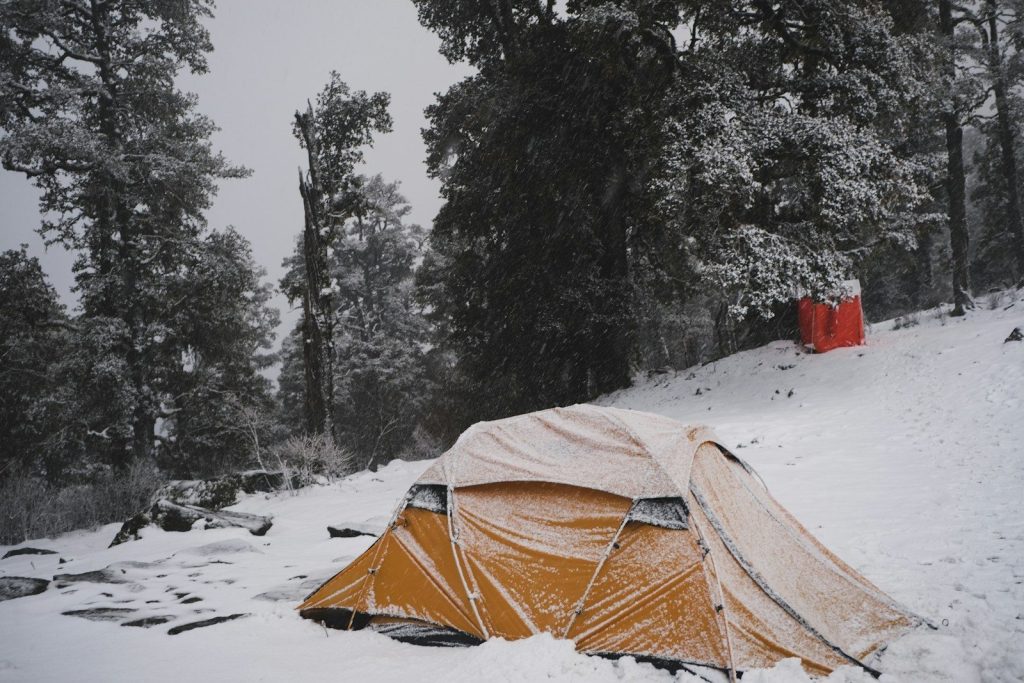
There is something profoundly magical about winter camping. The trails are completely empty, the backcountry is wrapped in a pristine blanket of quiet snow, and there are zero bugs to contend with. However, trading summer meadows for sub-freezing landscapes changes the rules of engagement entirely.
In the winter, your primary adversary isn’t just the cold—it is moisture, wind, and logistics. A drop in ambient temperature can freeze your water reserves inside your backpacking pack within hours, while hidden moisture from sweat can trigger rapid-onset hypothermia during a single rest break.
Whether you are planning an alpine snow-camping expedition or a cozy weekend truck-camping trip in zero-degree weather, adhering to these core safety directives will keep your winter wonderland from turning into a survival situation.
The Winter Survival Priority Matrix
| Risk Factor | Instant Threat | Dynamic Backcountry Fix | Essential Gear Solution |
| Internal Sweat | Freezes when you stop walking | Delayer before you start sweating | Synthetic Base Layers |
| Frozen Water | Dehydration; inability to cook | Store bottles upside down / sleep with filters | Wide-mouth Nalgene bottles |
| Convective Heat Loss | Ground pulls heat from your body | Double up your insulation pads | Sleeping Pad (R-Value 5.0+) |
| Dead Batteries | Zero navigation or light source | Keep electronics in internal chest pockets | High-capacity power bank |
Top 5 Cold-Weather Safety Essentials Vetted on Amazon
1. The Ultimate Ground Barrier: Therm-a-Rest NeoAir XTherm NXT
In sub-freezing conditions, the frozen ground will strip away your body heat three times faster than the ambient air. Standard summer sleeping pads are useless here. You need an extreme insulation layer.
-
Why It Wins: Boasting an incredible R-value of 7.3, the XTherm NXT offers the highest warmth-to-weight ratio on the market. It utilizes triangular core matrices to trap your radiant body heat, ensuring the freezing snow beneath your tent floor never reaches your back.
2. The Foolproof Water Storage: Nalgene Sustain Tritan Wide Mouth Bottle
Traditional hydration bladders with long rubber hoses are guaranteed to freeze solid inside your pack on a winter trail. You must switch to heavy-duty, wide-mouth hard bottles.
-
Why It Wins: The ultra-wide mouth prevents ice from sealing the opening closed. Furthermore, these bottles can withstand boiling water directly from your windproof camping stove, allowing you to use them as an internal bed-warmer at night.
3. The Emergency Cold Protection: HotHands Hand & Toe Warmers (Value Pack)
When temperatures drop into the single digits, your body naturally restricts blood flow to your extremities to protect your vital organs. Having chemical heat packs on hand is a critical safety redundancy.
-
Why It Wins: These air-activated packs provide up to 10 hours of continuous, localized heat. Sliding them into your winter gloves or down inside your hiking boots can instantly reverse early-stage numbness and prevent frostbite.
4. The Critical Footing Armor: Kahtoola MICROspikes Footwear Traction
An unexpected sheet of black ice on a steep switchback or a hard-packed snow trail can lead to a devastating slip-and-fall injury miles away from medical cell service.
-
Why It Wins: Featuring 12 heat-treated stainless steel cleats per foot, Kahtoola MICROspikes slip easily over standard trail runners or heavy leather boots. They deliver relentless, unyielding traction on icy, vertical terrain.
5. The Sub-Freezing Power Source: Anker Power Bank (PowerCore 24K)
Lithium-ion batteries hate the cold. Freezing temperatures cause internal resistance, draining your smartphone and ultralight headlamp batteries up to 50% faster than normal.
-
Why It Wins: This high-output, smart portable charger holds enough juice to revive your navigation systems multiple times. Its robust casing holds up against thermal drops, giving you a secure power lifeline in the wilderness.
4 Mandatory Rules of Winter Backcountry Safety
1. “Be Bold, Start Cold” (Sweat Management)
Sweating in the winter can be fatal. If you hike up a steep ridge wearing a heavy down parka, your hiking clothing will become saturated with sweat. The moment you stop to rest, that moisture cools down instantly, plunging your core body temperature into the danger zone.
-
The Rule: Before you leave the trailhead, strip down to your thin synthetic base layer and a wind shell. You should feel slightly chilly standing still. Within ten minutes of active hiking, your internal furnace will warm you up to the perfect temperature. Keep your heavy insulating layers at the very top of your pack to throw on immediately during rest breaks.
2. Protect Your Critical Water Filters
If you use a hollow-fiber membrane water filter (like a Sawyer Squeeze or Katadyn BeFree), a single freeze will permanently ruin it. If water freezes inside the micro-tubes, the ice expands and cracks the internal filtration fibers, allowing deadly bacteria to pass through undetected.
-
The Rule: Once temperatures drop below 32°F, your water filter never leaves your person. Keep it inside an internal zippered jacket pocket during the day, and place it inside a sealed zip-top bag at the bottom of your sleeping bag with you at night.
3. Store Your Water Bottles Upside Down
Ice freezes from the top surface downward. If you store your water bottles upright in your pack’s side pockets, the ice layer will form across the cap threadings, locking your water inside.
-
The Rule: Ensure your Nalgene caps are screwed on completely tight and store them upside down inside your pack. If ice begins to form, it will freeze at the bottom of the bottle, allowing you to open the cap and drink freely when you flip it right-side up.
4. The Hot Water Bottle Bed-Warmer Trick
If you are struggling to warm up inside your tent and your feet feel like ice, use thermodynamic transfer to save your sleep cycle.
-
The Rule: Boil a pot of water on your camp stove right before bed. Pour the boiling water into a hard-sided Nalgene bottle, seal the cap with maximum pressure, double-check that it does not leak, and slide it down into the footbox of your sleeping bag. This acts as a radiator, warming your blood vessels for up to 8 continuous hours.
FAQ: Cold-Weather Technical Realities
Q: Can I use my standard canister backpacking stove in winter?
A: Standard isobutane-propane canisters perform incredibly poorly below freezing. As the canister chills, the internal pressure drops, resulting in a weak, sputtering flame that cannot even melt snow. For deep winter camping, switch to an inverted canister stove (like the MSR WindBurner with a canister stand) or a heavy-duty liquid white-gas stove that requires manual priming.
Q: How do I prevent condensation from freezing inside my tent?
A: When you breathe out warm, moist air at night, it hits the freezing nylon walls of your tent and turns into frost. If your tent has poor ventilation, a simple bump of the tent wall will cause it to “snow” ice crystals all over your face. Leave your tent vents completely wide open—even if it’s freezing outside. You need active cross-ventilation to exhaust your breath’s moisture out of the structure.
Final Thoughts
Winter camping is an advanced discipline that requires absolute focus, methodical packing, and deep respect for the elements. By doubling up your ground insulation with a high R-value pad like the Therm-a-Rest XTherm, managing your internal moisture layers diligently, and preventing your water filters from freezing, you unlock an elite outdoor experience with complete safety confidence. Respect the cold, plan for redundancies, and embrace the frozen trails!
Best Winter Camping Gear: Essential Equipment for Cold-Weather Adventures
Disclaimer: As an Amazon Associate, I earn from qualifying purchases. Stay warm, stay alive, leave no trace!