
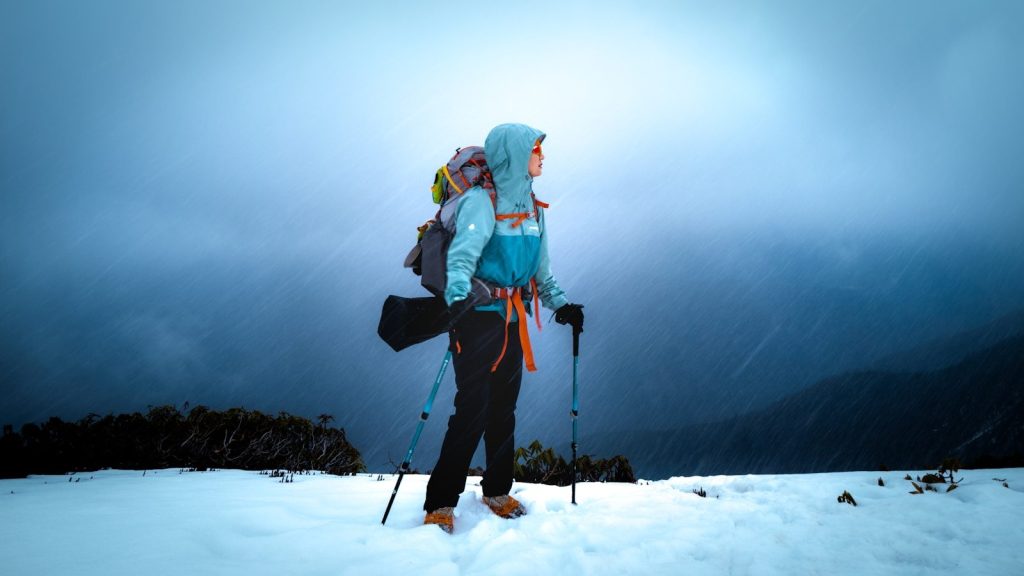
Stepping onto a pristine, snow-covered singletrack trail with everything you need to survive strapped to your spine is the ultimate expression of wilderness autonomy. Winter rewards backpackers with jaw-dropping, frozen landscapes, crisp air, and absolute silence, completely free from summer crowds, muddy bogs, and biting insects.
However, once ambient temperatures crash below freezing, the margin for operational error drops to absolute zero. In a winter environment, everyday tasks turn into complex thermodynamics exercises. Your drinking water freeze-locks inside your tubes, standard gas stoves lose pressure, and sweating during a steep climb can quickly lead to acute, life-threatening hypothermia once you stop moving.
To master the snowpack safely, you must shift your focus toward meticulous insulation management, precise fuel strategies, and metabolic security.
Here is the professional, vetted engineering blueprint for successful winter backpacking, along with the top 5 sub-zero trail upgrades available on Amazon.
The Sub-Zero Backcountry Logistics Matrix
| Operational Threat | Biological / Physical Hazard | Tactical Prevention Protocol | Key Piece of Gear |
| Ground Conduction | Freezing spine; rapid core heat drain | Stack mechanical and inflatable insulation layers | ASTM R-5.0+ Sleep Pad |
| Freezing Fluids | Burst filters; zero hydration capacity | Keep critical items inside your thermal insulation zone | Nalgene / Insulated sleeve |
| Fuel Freeze-Up | Dead stove; inability to melt snow or cook | Shift to pressurized liquid fuel or inverted feeds | Winter Multi-fuel Stove |
| Sweat Saturation | Flash freezing of garments post-hike | Modular pacing; strip layers before you sweat | Technical Merino/Synthetic base |
Top 5 Winter Backpacking Upgrades Vetted on Amazon
1. The Ultimate Thermodynamic Sub-Zero Shield: Therm-a-Rest NeoAir XTherm NXT
When sleeping directly on feet of dense snowpack or alpine ice sheets, your mattress determines your survival far more than your sleeping bag.
-
Why It Wins: Boasting a staggering, laboratory-verified R-value of 7.3 under the rigid ASTM F3340-18 standard, the XTherm NXT is the gold standard for cold-weather isolation. It utilizes a matrix of internal triangular chambers and reflective thermal films to bounce your body heat back to your skin while trapping freezing ground air below. It packs down to the size of a one-liter bottle, easily fitting into any waterproof trail pack.
2. The Indestructible Snow-Melting Engine: MSR XGK EX Multi-Fuel Stove
In deep winter, liquid water doesn’t exist; every drop you drink must be rendered by melting solid snow blocks. Standard canister stoves collapse under this load, but this expedition icon thrives.
-
Why It Wins: The XGK EX functions completely independent of gas canisters, running instead on highly pressurized liquid white gas or kerosene pumped manually from a rugged aluminum bottle. Because white gas does not suffer from cold-weather pressure drops, it delivers a massive, roaring flame down to 40F, melting giant pots of ice in minutes.
3. The Unfreezable Hydrating Vault: Outdoor Research Water Bottle Parka
Standard hydration bladder tubes freeze completely solid within 30 minutes of sub-zero exposure, cutting off your water supply and ruining your hydration strategy.
-
Why It Wins: Built with thick, closed-cell aerogel insulation wrapped in a water-resistant nylon shell, this specialized pouch acts as a heavy-duty thermos sleeve for a standard 32oz wide-mouth Nalgene bottle. It features a secure hook-and-loop strap system, anchoring directly to the hip belt or shoulder straps of your ventilated backpack for instant access.
4. Flawless Traction on Solid Glaze Ice: Kahtoola MICROspikes Footwear Traction
A single slip on an icy, wind-scoured mountain ridge while carrying a heavy 40-pound pack can result in a catastrophic, bone-breaking fall far from rescue.
-
Why It Wins: MICROspikes feature 12 heat-treated stainless steel cleats linked together by an industrial welded chain matrix. The system stretches seamlessly over standard long-distance hiking boots via a tough elastomer harness. They bite deeply into hard-packed snow and pure sheet ice, giving you rock-solid stability across dangerous winter switchbacks.
5. Extreme Kinetic Eye Protection: Julbo Vermont Classic Glacier Sunglasses
Baking winter sun reflecting off a pure white snow blanket acts as a massive magnifying glass, projecting intense UV radiation that can cause blinding headaches and acute “snow blindness.”
-
Why It Wins: Designed specifically for alpine mountaineers, these heritage glacier glasses feature dark, Category 4 lenses that block 95% of visible light. They incorporate iconic, soft leather side shields that completely block peripheral sun glare and freezing arctic crosswinds from drying out and irritating your eyes.
3 Critical Tactical Protocols for Sub-Zero Backcountry Trails
To maintain absolute thermal balance and structural safety in the frozen wilderness, implement these three strict rules into your routine:
1. Master the Rule of “Be Bold, Start Cold”
When standing at a winter trailhead, it is incredibly tempting to wrap yourself inside a thick, heavy insulation down jacket before hoisting your pack. This is a critical tactical mistake. Within 15 minutes of hiking up a steep switchback, your large leg muscles generate immense heat, triggering heavy sweat.
-
The Hazard: Sweat is the absolute enemy of winter survival. Moisture fills the air pockets of your technical base layers, destroying their insulation value. The moment you stop hiking to check a map, that trapped wet sweat drops to freezing temperatures, triggering shivering and hypothermia.
-
The Protocol: Strip down to just your synthetic or merino base layer and a windproof shell before you start hiking. You should feel slightly cold standing at the trailhead. Once your muscles start firing, your body temperature will normalize perfectly. Keep your heavy down jacket at the very top of your pack, ready to throw over your clothes the exact minute you drop anchor for a trail break.
2. Guard Your Water Filter with Your Internal Core Heat
Modern hollow-fiber membrane water filters (like the Sawyer Squeeze or Katadyn BeFree) rely on microscopic straw-like tubes to trap bacteria.
-
The Hazard: If your filter contains residual moisture and is left exposed to freezing air, that water expands as it turns into ice, micro-tearing the internal glass fibers. This structural damage is completely invisible to the naked eye, meaning the filter will look fine but will allow dangerous waterborne pathogens straight through into your drinking cup.
-
The Protocol: Never store your water filter in an exterior backpack pocket during winter hikes. Keep it inside an internal zippered pocket close to your torso heat. Most importantly, when sleeping inside your tent at night, tuck your water filter, smartphone, and headlamp batteries directly into the toe box of your sleeping bag. Your body heat will keep these systems alive and functioning.
3. Implement the Additive “Pad-Stacking” Architecture
If you don’t own an expensive, dedicated winter mattress like the Therm-a-Rest XTherm, you can safely engineer a high-insulation barrier by layering your existing 3-season gear.
-
The Protocol: As explained in our comprehensive guide to R-value science, thermal values are strictly additive. Take a standard, budget-friendly closed-cell foam pad (like a z-fold foam mat) and place it flat on the tent floor. Then, inflate your standard 3-season air pad and place it directly on top of the foam layer. Stacking a foam mat (R-2.0) with an air pad (R-3.0) gives your sleeping system a combined rating of R-5.0, creating a secure barrier against frozen snowpacks.
FAQ: Outsmarting Winter Trail Realities
Q: Why do my lithium-ion headlamp and phone batteries die so fast in the cold?
A: Sub-zero temperatures slow down the chemical reactions inside lithium-ion batteries, causing internal resistance to skyrocket and forcing the cell to report a rapid, false power drop. To keep your electronics alive, store them in insulated pockets against your body. As emphasized in our guide on outdoor lighting etiquette, switch your electronics over to high-performance cold-vetted cells, and carry a portable, well-insulated external power bank sealed deep inside your gear layers.
Q: Can I sleep with my face completely buried inside my winter sleeping bag for warmth?
A: No, never breathe directly inside your sleeping bag. Your breath contains hot, highly concentrated water vapor. Exhaling directly into the interior fabric forces that moisture to settle inside the delicate down feathers of your bag. Over the course of the night, that moisture will freeze into a layer of ice frost, collapsing the down clusters and destroying the bag’s warmth-retaining loft. Always keep your nose and mouth exposed to the open air, and wear a soft fleece balaclava or neck gaiter to protect your face.
Final Thoughts
Conquering the winter wilderness requires transitioning away from casual trial-and-error packing toward total engineering discipline. Upgrading your cold-weather inventory to specialized, technical hardware like the Therm-a-Rest XTherm NXT, an unfreezable liquid white gas stove, and high-tensile Kahtoola traction spikes eliminates the variables that cause trail emergencies. Manage your sweat output through modular layers, insulate your hydration storage diligently, and protect your electronics with your own core body heat. Pack with precision, respect the laws of thermodynamics, and dominate the most frozen, pristine singletrack loops with absolute safety and technical confidence!
Best Stoves for Winter Camping: Vetted Sub-Zero Cooking Systems
Disclaimer: As an Amazon Associate, I earn from qualifying purchases. Check local avalanche forecasts and trail conditions thoroughly before entering deep winter zones, explore wisely, leave no trace!