
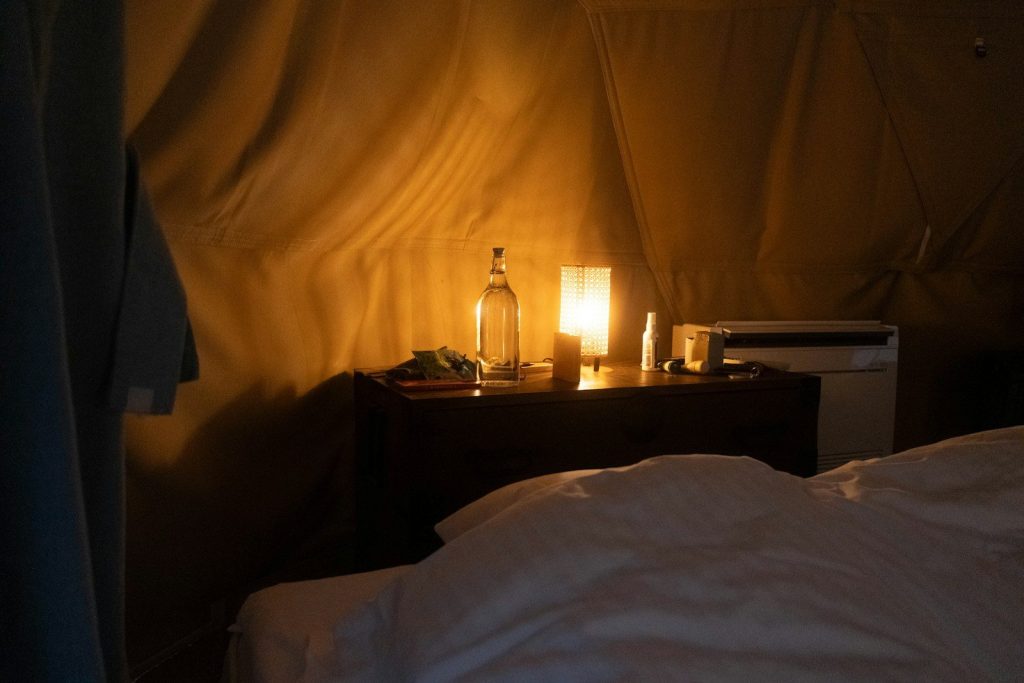
When the sun drops behind the trees, your campsite changes instantly. Finding your way to the bathroom, flipping burgers on a portable grill, or reading a book inside a budget tent all require different types of light. Campsite lighting is no longer just about raw power (lumens)—it’s about color temperature, battery efficiency, and hands-free usability.
Here is how to design the perfect lighting ecosystem for your next outdoor adventure.
1. Choose Your Source: The 4 Pillars of Camp Light
Headlamps: The Hands-Free Essential
A headlamp is the single most important light you will own. Wherever your head turns, the light follows.
-
Best for: Pitching tents in the dark, hiking at night, and one-pot cooking.
-
What to look for: A dedicated Red Light Mode. Red light preserves your natural night vision and doesn’t attract bugs.
Lanterns: Ambient Area Lighting
Lanterns cast a 360-degree glow, making them perfect for illuminating shared spaces rather than focusing on a single spot.
-
Best for: Placing on the picnic table during family meals or hanging from the center loop of your tent.
-
What to look for: Frosted globes or diffusers that soften the glare, and warm-tint LEDs (around 2700K–3000K) for a cozy atmosphere.
String Lights: The Glamping Vibe
Flexible, lightweight wires embedded with tiny LEDs have taken over modern campsites.
-
Best for: Decorating your family glamping tent, outlining guy lines so people don’t trip, and creating a soft, non-intrusive base layer of light across the site.
Flashlights: The Traditional Spotlight
While less popular for general camp tasks due to keeping one hand occupied, a high-lumen flashlight is still unrivaled for throwing a beam deep into the woods.
-
Best for: Scouting for firewood, searching for a dropped item, or security.
2. Technical Specs Decoded: Lumens and Run Time
When browsing Amazon, don’t get trapped in the “Lumen Arms Race.” More lumens mean more heat and faster battery drain.
| Activity | Recommended Lumens | Best Light Type |
| Inside the Tent / Reading | 20 – 50 Lm | Headlamp (Low) or Mini Lantern |
| Cooking & Trail Finding | 100 – 250 Lm | Headlamp (Medium/High) |
| Picnic Table / Socializing | 200 – 400 Lm | Rechargeable Lantern |
| Spotting / Searching | 500+ Lm | Tactical Flashlight |
3. Power Management: USB vs. Solar vs. Alkaline
-
USB Rechargeable (Li-ion): The gold standard for 2026. They are cheaper over time and can be topped off using a portable power station.
-
Solar-Powered: Excellent for backpacking families. Hang the light on your pack during the day, and it charges for free.
-
Alkaline (AA/AAA/D): While traditional, they are great for emergency backup storage because they don’t lose charge sitting in a bin for months. However, they perform poorly in freezing winter weather.
4. 3 Rules for Courteous Camp Lighting
-
Angle Your Headlamp Down: When walking into a social circle or talking to your camp partners, angle your headlamp down toward their feet. Nobody likes getting blasted in the eyes with 300 lumens of cool white light.
-
Ditch the Cool Blue: Look for lights that explicitly list “Warm White” or “Warm Tint” LEDs. Cool white light looks like a sterile hospital room and ruins the magic of sitting under the stars.
-
Know Your Weather Rating: Ensure your primary lights have at least an IPX4 waterproof rating. This means they can survive a sudden downpour if left out on the picnic table overnight.
FAQ: Lighting Mastery
Q: Why does my headlamp have a red light option?
A: Human eyes take about 20-30 minutes to adjust to the dark. White light resets this clock instantly, while red light allows you to read a map or check your camping utensils without losing your night vision.
Q: Can I use solar lights in the shade?
A: They will still charge under overcast skies or light tree canopy, but at a much slower rate. For best results, place them in direct sunlight on your dashboard or on top of your hiking backpack.
Final Thoughts
For a minimalist hiker, a single premium headlamp with a red-light mode is all you need. For car campers, a combination of a good headlamp and a warm-tint lantern creates the ultimate balance of utility and comfort. Light up your night smartly, and respect the darkness!
Best Camping Lanterns & Headlamps: Brightness vs Battery Life
Disclaimer: As an Amazon Associate, I earn from qualifying purchases. See the trail clearly, camp safely!