
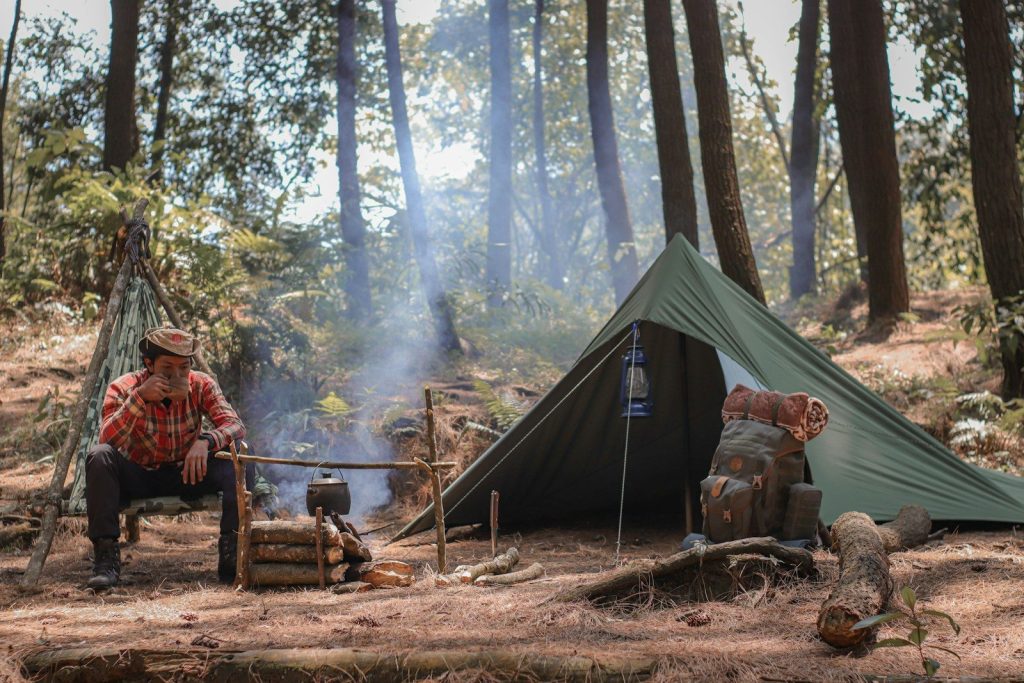
Off-grid camping (often called “boondocking” or “dispersed camping”) means leaving the developed campgrounds behind. No toilets, no tap water, and no power outlets. It offers the ultimate silence and the best views, but it also places 100% of the responsibility for your survival on you.
To succeed off-grid in 2026, you need to master four pillars: Power, Water, Waste, and Communication. Here is your professional roadmap to total wilderness independence.
1. Power: Harnessing the Sun
When you’re off-grid, your batteries are your lifeline for navigation and emergency lighting.
-
The Gear: A Portable Power Station (like Jackery or EcoFlow) paired with a Foldable Solar Panel.
-
The Strategy: Position your panels early in the morning. In 2026, modern panels can still pull charge in overcast conditions, keeping your Tent Lights and phones ready for the night.
2. Water: Pure Sources Only
You cannot carry enough water for a week-long trip. You must know how to harvest it.
-
The Gear: A gravity-fed Water Filter System. It allows you to filter 4-10 liters at a time while you set up your Lightweight Tent.
-
Pro Tip: Always have a backup. Carry Purification Tablets in your First Aid Kit as a fail-safe.
3. Waste: The “Leave No Trace” Protocol
Without a designated trash bin, you are the janitor of the wilderness.
-
Human Waste: If there’s no toilet, you must use a Camp Trowel to bury waste at least 6-8 inches deep and 200 feet away from water sources.
-
Gray Water: Use Biodegradable Soap for your One-Pot Recipes, but never dump it directly into a stream. Spread it over dry ground so the soil can filter it.
4. Navigation & Safety
Off-grid usually means “Off-Signal.” Your smartphone’s GPS might work, but you won’t have maps without a connection.
-
Offline Maps: Download your area on Gaia GPS or OnX Backcountry before you leave.
-
Emergency: A Satellite Messenger (like Garmin inReach) is non-negotiable for off-grid trips. It allows you to call for help even from the bottom of a canyon.
Off-Grid Essentials Comparison
| Category | Essential Gear | Backup Option | Why It Matters |
| Power | Solar Generator | Power Bank | Safety & Comm. |
| Water | Gravity Filter | Boiling Pot | Health / Hydration |
| Kitchen | Liquid Fuel Stove | Jetboil | Fuel Efficiency |
| Waste | Wag Bags | Digging Trowel | Env. Protection |
| Light | Solar Lantern | Flashlight | Camp Setup |
3 Rules for Choosing an Off-Grid Site
-
Check Land Ownership: Use an app to ensure you are on BLM (Bureau of Land Management), National Forest, or public land where dispersed camping is legal.
-
The “Hard Surface” Rule: Always pitch your Modern Tent on a durable surface like rock, sand, or gravel to avoid damaging fragile vegetation.
-
Fire Safety: As we discussed in our Fire Safety Guide, never build a new fire ring. Use existing ones or, better yet, bring a Portable Fire Pit to leave zero impact on the ground.
FAQ: Off-Grid Life
Q: How do I keep my food safe without a fridge?
A: Use a High-Performance Cooler with dry ice, or stick to dehydrated meals. If you are in bear country, a Bear Bolt Canister is mandatory.
Q: What if I run out of power?
A: This is why we carry a Hand-Crank Radio/Flashlight. It’s the ultimate “plan C” for off-grid survival.
Final Thoughts
Camping off-grid is the purest form of freedom. It’s just you, your Hiking Boots, and the horizon. By mastering your gear and respecting the land, you turn a potentially dangerous trip into a soul-recharging adventure.
Disclaimer: As an Amazon Associate, I earn from qualifying purchases. Respect the wild, stay independent!