
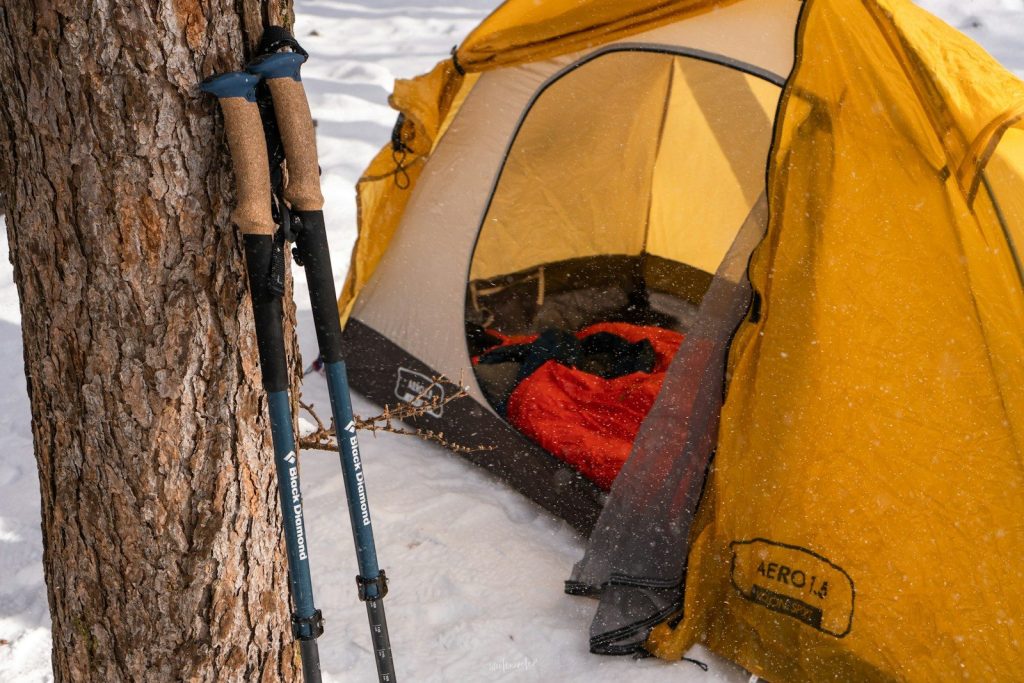
When planning a cold-weather expedition or setting up an off-grid winter basecamp, it is highly instinctive to invest almost your entire budget into a high-loft, sub-zero down sleeping bag. But in the physics of backcountry survival, your sleeping bag is only half of the thermal equation.
The moment you lie down, your heavy body weight fully compresses the down feathers underneath your back. This squashed material can no longer trap dead air, leaving you directly exposed to the freezing ground. Without a high-performance insulated sleeping pad, the frozen earth acts as a thermodynamic vacuum, rapidly draining your core body heat through conduction.
To sleep warm and safely on frozen dirt, ice sheets, or dense snowpacks, you need a pad engineered with a high R-value (Thermal Resistance). Under the standardized ASTM F3340-18 testing matrix, any pad designated for genuine winter use must deliver an R-value of 5.0 or higher.
From hyper-lightweight inflatable winter shields to ultra-luxurious self-inflating camp beds, here are the top 5 sleeping pads for cold ground available on Amazon vetted for thermal performance and structural durability.
The Cold-Ground Thermal Resistance Matrix
| Sleeping Pad Model | ASTM R-Value | Thickness Profile | Weight Metric | Insulation Tech | Best Used For |
| NEMO Tensor Extreme | 8.5 (Warmest) | 3.5 Inches | 17 oz (480g) | 4 Layers of Thermal Mirror film | Ultralight Winter Fastpacking |
| Therm-a-Rest XTherm NXT | 7.3 | 3.0 Inches | 15.5 oz (440g) | Triangular Core Matrix | Deep Alpine Mountaineering |
| Exped MegaMat 10 | 8.1 | 3.9 Inches | 4.6 lbs (2.1kg) | Open-cell foam & air core | Luxury |
| Exped Ultra 6.5R | 6.5 | 3.5 Inches | 24 oz (680g) | Down-filled synthetic chambers | Side Sleepers on Cold Ground |
| NEMO Switchback (Foam) | 2.0 | 0.9 Inches | 14.5 oz (410g) | Closed-cell foam & metal film | Rigid indestructible helper |
Top 5 Cold-Ground Sleeping Pads Vetted on Amazon
1. The Undefeated King of Sub-Zero Warmth: NEMO Tensor Extreme Conditions
For winter fastpackers and high-altitude mountaineers who demand the absolute highest warmth-to-weight ratio ever engineered in a sleeping pad.
-
Why It Wins: Boasting a mind-blowing, industry-leading R-value of 8.5, the Tensor Extreme is the warmest ultralight air pad ever created. NEMO achieved this breakthrough by suspending four layers of high-performance Thermal Mirror metalized film inside a quiet, 3.5-inch thick baffled chamber matrix. It keeps you floating high off frozen granite or snowpacks, operates silently without the “potato-chip” crinkle noise of older insulated pads, and packs down to the size of a standard water bottle.
2. The Elite Standard for Alpine Mountaineers: Therm-a-Rest NeoAir XTherm NXT
The undisputed, time-tested champion of alpine expeditions, celebrated universally by thru-hikers facing freezing shoulder-season and winter climates.
-
Why It Wins: Clocking in at a mere 15.5 ounces, the XTherm NXT delivers a massive 7.3 R-value in a hyper-durable package. It features an incredibly tough 70D nylon bottom fabric that is highly resistant to punctures from frozen dirt, ice crystals, or stray twigs. Its internal Triangular Core Matrix traps your body’s radiant warmth while completely blocking the cold convective air rising from the frozen ground below.
3. The Five-Star Luxury Basecamp Mattress: Exped MegaMat 10
For overlanders, car campers, and glampers inside luxury canvas wall tents who refuse to compromise on comfort and want to recreate a five-star residential mattress on frozen ground.
-
Why It Wins: Boasting a massive 8.1 R-value, the MegaMat 10 uses a hybrid structure of self-inflating open-cell foam and vertical air sidewalls that are 3.9 inches thick. The open-cell foam acts as an impenetrable barrier to cold conduction, while the soft stretch-tricot surface cradles your shoulders and hips perfectly. It is highly insulated, incredibly comfortable, and completely self-inflates within minutes.
4. The Side-Sleeper’s Down-Filled Sanctuary: Exped Ultra 6.5R Sleeping Pad
For back-country explorers who sleep primarily on their sides and require a thick, stable, and warm platform that prevents their hips and shoulders from bottoming out against the frozen ground.
-
Why It Wins: The Ultra 6.5R uses vertical, body-cradling baffles that are insulated with premium 700-fill-power down. Because down is highly efficient at trapping warm air, this pad delivers a cozy 6.5 R-value while feeling incredibly plush and stable. The vertical side rails keep you centered on the pad all night, preventing you from slipping off onto the cold tent floor.
5. The Indestructible Backup Shield: NEMO Switchback Closed-Cell Foam Pad
For budget-conscious campers, beginners, or minimalist thru-hikers who require a completely puncture-proof, zero-failure insulation layer.
-
Why It Wins: Unlike inflatable air pads, a closed-cell foam (CCF) pad can never leak, pop, or suffer from valve failures. The Switchback features a dual-density molded foam pattern that traps warm air in its hexagonal nests, coupled with a metallic thermal film coating that reflects your body heat upward. While its standalone 2.0 R-value is only suited for mild spring/summer conditions, it serves as the ultimate protective and additive layer in advanced winter stacking configurations.
3 Critical Thermodynamic Rules for Cold-Ground Sleeping
To maintain absolute core temperature balance on frozen trails, implement these three scientific rules into your night camp routine:
1. Leverage the Power of Additive “R-Value Stacking”
If you do not own an expensive sub-zero pad like the Tensor Extreme, you can easily engineer an incredibly warm barrier by layering your existing 3-season gear.
-
The Physics: Thermal resistance is strictly additive.
-
The Protocol: Take a standard, inexpensive closed-cell foam pad like the NEMO Switchback (R-2.0) and lay it flat on the tent floor. Then, inflate your standard 3-season air pad (such as a NEMO Tensor All-Season, R-5.4) and place it directly on top of the foam mat. Stacking these two pads yields a combined R-value of 7.4, creating a highly secure thermal barrier against frozen snowpacks while protecting your delicate air mattress from sharp ground debris.
2. Never Inflate Your Winter Pad Using Your Breath
When setting up your basecamp in freezing temperatures, it is highly tempting to quickly blow up your air mattress using your mouth. Break this habit immediately.
-
The Hazard: Human breath is saturated with hot, highly concentrated moisture vapor. Blowing directly into your pad forces that warm moisture to condense inside the internal air chambers. In sub-zero conditions, that water vapor will freeze, forming a layer of ice crystals inside the pad. This ice layer destroys the thermal reflective films, ruins the pad’s insulation value, and can lead to dangerous mold rot over time.
-
The Protocol: Always utilize the lightweight Pump Sack (inflation bag) included with your premium pad. The pump sack captures dry, cold ambient air and forces it into the pad, keeping the internal chambers completely dry, pristine, and thermally efficient.
3. Account for the “Late-Night Cold Pressure Drop”
You inflate your sleeping pad perfectly firm at 6:00 PM, but by midnight, the pad feels soft, saggy, and your hips are touching the cold ground. This is usually not a puncture leak—it is basic physics.
-
The Science (Gay-Lussac’s Law): The pressure of a gas decreases proportionally as its temperature drops. The warm air pushed into the pad during the afternoon cools down significantly as the night temperature crashes, causing the air to contract and the pad to lose volume.
-
The Protocol: Always top off your air pad with 2 to 3 extra pumps of dry air right before you climb inside your wearable winter sleeping bag for the night, ensuring you stay elevated above the frozen earth all night long.
FAQ: Outsmarting Cold Ground Realities
Q: Can I use a standard pool air mattress for cold-weather camping?
A: Absolutely not. Cheap recreational pool mattresses or uninsulated large vinyl guest beds contain zero internal insulation or reflective films. The giant volume of air inside the mattress simply circulates, absorbing the freezing ground temperature and transferring it directly to your body. Sleeping on an uninsulated mattress on cold ground can trigger rapid, dangerous hypothermia, even if you are wearing heavy winter clothes.
Q: What R-value do I need for standard spring and autumn camping?
A: For general 3-season camping where ground temperatures stay above freezing (32F or 0C), a pad with an R-value of 3.0 to 4.5 is the ideal sweet spot. This provides great insulation against chilly ground while keeping the pad lightweight and compact enough to fit inside a standard ventilated trail pack.
Final Thoughts
Your winter sleep system is only as warm as the insulation barrier separating your core from the frozen earth. Upgrading your gear list from uninsulated, thin air mats to an engineered cold-ground shield like the record-breaking NEMO Tensor Extreme, the alpine-vetted Therm-a-Rest XTherm NXT, or the plush Exped MegaMat 10 completely eliminates the dangerous anxiety of shivering through freezing nights. Stack your pads systematically, inflate them dry using your pump sack, and top off your air pressures before quiet hours begin. Sleep warm, protect your core, and dominate the most frozen, pristine singletrack loops with absolute physical comfort and total confidence!
Sleeping Bag vs Quilt: The Ultimate Backcountry Sleep System Guide
Disclaimer: As an Amazon Associate, I earn from qualifying purchases. Protect your air pads from sharp dog claws using a protective blanket layer, sleep warm, leave no trace!