
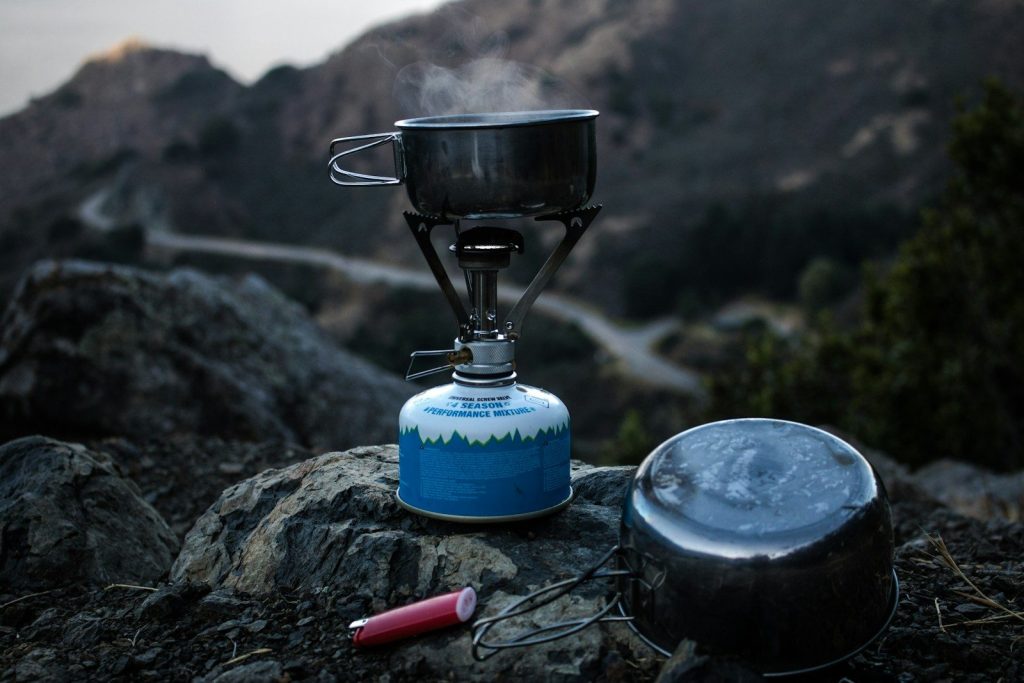
When operating a sub-zero basecamp or executing a deep winter backpacking loop, your camp stove is far more than a simple convenience for hot meals. It is a critical piece of safety and life-support hardware. In deep winter, liquid water does not exist; every single drop of hydration you consume must be physically rendered by melting solid blocks of snow or alpine ice.
However, once ambient temperatures crash below freezing, traditional lightweight canister stoves introduce severe physical and thermodynamic failures. Standard isobutane/propane gas blends rely on the natural warmth of the surrounding air to boil and convert the pressurized liquid inside the canister into vapor gas before it exits the burner jets.
When the canister drops below freezing, this vaporization process ceases. Internal pressure plummets, your stove produces a weak, sputtering yellow flame, and it can take over 40 minutes just to melt a single cup of slush, rapidly depleting your fuel reserves.
To defeat sub-zero climates, your kitchen layout must deploy stoves engineered for cold-weather physics. This means shifting toward liquid-fuel systems that maintain mechanical pressure manually, or utilizing inverted canister stoves equipped with thermodynamic pre-heating tubes.
From legendary expedition multi-fuel workhorses to high-capacity winter basecamp stoves, here are the top 5 cold-weather camping stoves available on Amazon vetted for pressure stability and sub-zero thermal output.
The Cold-Weather Fuel Performance Matrix
| Stove Model & Style | Primary Fuel Architecture | BTU Heat Output | Fuel Delivery Mode | Best Used For | Key Thermodynamic Advantage |
| MSR WhisperLite Universal | White Gas / Liquid Propane | 10,000 BTU | Remote Hose / Inverted Canister | Alpine Thru-Hiking | Pre-heat tube vaporizes liquid feeds |
| MSR XGK EX Expedition | White Gas, Kerosene, Diesel | 10,500 BTU | Pressurized Fuel Bottle | Arctic Mountaineering | Shaker Jet cleans dirty fuel instantly |
| Coleman Dual Fuel 2-Burner | White Gas / Unleaded Gas | 14,000 BTU | Manual Pressure Tank | Winter | Mass thermal output down to -40°F |
| Soto Fusion Trek | Isobutane/Propane Canister | 11,000 BTU | Remote Hose / Upright Micro | Cold Shoulder-Season | Micro-regulator maintains stable pressure |
| Camp Chef Explorer 2x | Bulk Propane (Liquid Feed) | 60,000 BTU | Heavy-Duty Regulator | Large Group Overlanding | Massive cast-aluminum high-output burners |
Top 5 Cold-Weather Camping Stoves Vetted on Amazon
1. The Undefeated Hybrid Champion: MSR WhisperLite Universal Stove
The WhisperLite is a legendary backcountry icon, trusted by polar explorers and mountain guides for decades due to its absolute mechanical reliability and multi-fuel adaptability.
-
Why It Wins: The WhisperLite Universal is a thermodynamic masterpiece. It features a specialized pre-heating tube that loops directly over the burner flame. This allows you to flip your isobutane gas canister upside down (inverted canister mode), forcing liquid fuel down the fuel hose. The high-heat loop instantly vaporizes the liquid into a powerful gas before it hits the jets, allowing you to run canister gas efficiently down to 0F (-18C). If the cold drops further, you can instantly swap the adapters to burn highly pressurized liquid white gas.
2. The Invincible Arctic Expedition Vault: MSR XGK EX Multi-Fuel Stove
When your route involves extreme sub-zero alpine blizzards where stove failure is completely unacceptable and you must burn whatever fuel is locally available.
-
Why It Wins: The XGK EX is built like an industrial tank with zero delicate moving parts to freeze or break. Running strictly on highly pressurized liquid fuels (white gas, kerosene, or auto diesel) pumped manually inside a rugged aluminum fuel bottle, it ignores ambient cold entirely, blasting out a roaring flame down to -40F. It features MSR’s patented Shaker Jet technology—simply shaking the stove clears any carbon soot blocks from the jet needle instantly without taking the burner apart.
3. The Ultimate Heavy-Duty Basecamp Engine: Coleman Dual Fuel 2-Burner Stove
For vehicle overlanders, winter car campers, and hunting camps who need high-capacity dual-burner cooking power inside their heavy-duty canvas basecamps.
-
Why It Wins: Traditional green propane bottle stoves suffer heavy pressure drops in severe cold. This heavy-duty Coleman classic bypasses this issue entirely by utilizing a built-in liquid fuel storage tank. By hand-pumping the plunger, you manually generate immense operating pressure that forces liquid white gas or standard unleaded gasoline through the generator tube. It generates two massive, fully adjustable cooking rings that melt massive pots of ice in minutes, nesting perfectly beneath your camping kitchen box organizers.
4. The Smart Micro-Regulated Gas System: Soto Fusion Trek Canister Stove
For minimalist backpackers and winter day-hikers who prefer the clean, fast convenience of a standard gas canister but want to mitigate cold-weather sag.
-
Why It Wins: Unlike standard budget camp burners that lose flame strength as the gas tank chills, Soto incorporates an advanced, internal micro-regulator valve system. This mechanical governor monitors shifting pressures inside the line, dynamically widening or narrowing the fuel gate to maintain a perfectly uniform, steady gas velocity even when the canister ice-cools. The remote hose design lowers your center of gravity, preventing heavy snow pots from tipping over.
5. The High-Output Industrial Monolith: Camp Chef Explorer 2x Blue Flame Stove
For large group winter expeditions, snowmobile crews, and basecamps requiring immense thermal mass to boil massive melting vats.
-
Why It Wins: The Explorer 2x is an absolute powerhouse, blasting out a staggering 60,000 total BTUs via two massive cast-aluminum burner blocks. It links directly to large, heavy-duty 20lb bulk residential propane tanks via a high-pressure regulator hose. Because bulk tanks contain immense liquid volume, they resist cold-weather pressure drops far better than tiny disposable camping bottles, providing continuous, commercial-grade heat to cook large family winter camping checklist menus.
3 Critical Laws of Sub-Zero Camp Kitchen Thermodynamics
To ensure your stove maintains optimal pressure and melts snow with high fuel-efficiency, implement these three professional protocols:
1. Never Place Your Cold Stove Directly on Top of Snow
When you place a hot, burning stove directly onto loose powder snow, the radiant heat will melt the snowpack beneath the legs, causing the stove to tilt, warp your pots, and potentially dump gallons of boiling water inside your 4-season winter tent vestibule.
-
The Hazard: More importantly, the direct contact with frozen snow acts as an intense thermal sink, rapidly conducting cold straight into your stove body and fuel line, collapsing internal pressures.
-
The Protocol: Always establish a rigid structural foundation. Place a flat piece of plywood, a thick square of closed-cell foam insulation wrapped in heavy foil, or an aluminum baseplate (like an MSR Trillium stove base) directly on top of the packed snow before setting up your burner legs. This fully isolates the metal frame from thermal conduction, keeping your burning cycle highly efficient.
2. Isolate and Insulate Your Gas Canisters Pre-Ignition
If you choose to run a gas canister stove (like the Soto Fusion Trek) in sub-zero weather, the expansion of the gas inside the cylinder naturally causes the canister’s outer metal walls to become freezing cold—often dropping far below the ambient air temperature.
-
The Protocol: Keep your spare fuel canisters insulated inside your vehicle cab or wrapped inside your heavy down down sleeping garments before cooking. When igniting, place the active canister inside a insulated neoprene sleeve or set it inside a shallow bowl containing an inch of liquid trail water. Because liquid water cannot drop below 32F (0C) without turning to solid ice, the water bath acts as a warm radiator, keeping the isobutane mixture warm enough to volatilize and feed the line.
3. Always Maintain the “Liquid Seed” Snow-Melting Matrix
When converting field snow into drinking water, you cannot simply fill a bone-dry, hot metal pot to the brim with light, fluffy powder snow and crank up your burner flame to maximum.
-
The Physics: Fluffy snow is primarily trapped air pockets, acting as an excellent thermal insulator. If you apply high-intensity flame beneath dry snow, the intense heat will immediately scorch the bottom of the pot, burning the dry ice crystals and giving your resulting drinking water a foul, bitter chemical taste while damaging your lightweight titanium or aluminum pan linings.
-
The Protocol: Always keep a “seed” of liquid water (roughly 1 to 2 inches) at the bottom of your pot. Turn on your liquid fuel camping stove, let the seed fluid heat up, and then slowly add packed blocks of dense snow to the boiling bath. The snow will melt instantly into the liquid reservoir, preserving your cookware and delivering clean, sweet water.
FAQ: Outsmarting Cold-Weather Backcountry Cooking
Q: Can I run my white gas expedition stove safely inside my tent during a blizzard?
A: Operating any combustion stove inside a closed sleeping tent is highly dangerous. Beyond the catastrophic fire hazard of bringing high-heat flames near flammable nylon walls, priming a liquid fuel stove releases large flare-up flames and fills the space with dangerous carbon monoxide (CO) gas, which can rapidly lead to fatal asphyxiation. Always cook outside the main tent body, utilizing a highly ventilated, open-air vestibule zone or beneath a dedicated windproof snow wall shelter.
Q: Why does my liquid fuel stove require “priming” before it can burn cleanly?
A: Liquid white gas cannot burn cleanly in its raw liquid state; it must be converted into a pressurized gas vapor before exiting the jet nozzle. Priming involves letting a few drops of liquid fuel flow into a small cup beneath the burner head and lighting it on fire intentionally. This small initial flame creates an intense thermal envelope that heats up the stove’s internal generator tube. Once the generator tube is hot, opening the main valve forces liquid fuel through the piping, vaporizing it instantly into a roaring, clean blue gas flame.
Final Thoughts
Conquering the frozen backcountry requires moving away from basic, upright summer gas burners toward heavy-duty, pressure-vetted winter cooking engines. Upgrading your camp kitchen inventory to specialized, technical hardware like the dual-fuel MSR WhisperLite Universal, the indestructible MSR XGK EX, or a manually pressurized Coleman two-burner station completely eliminates the frustrating drop in flame power caused by freezing weather. Isolate your stove chassis from direct snow contact, insulate your fuel canisters diligently, and melt your trail snowpacks using a liquid seed matrix. Fuel your body with hot, nutrient-dense meals, respect the laws of thermodynamics, and dominate the most frozen wilderness singletrack loops with absolute safety and technical confidence!
Best Camping Kitchen Boxes: Vetted Heavy-Duty Chuck Boxes for Organized Cooking
Disclaimer: As an Amazon Associate, I earn from qualifying purchases. Filter all wilderness melted snow water through a certified micro-filter to ensure absolute micro-bacterial safety, stay warm, leave no trace!