
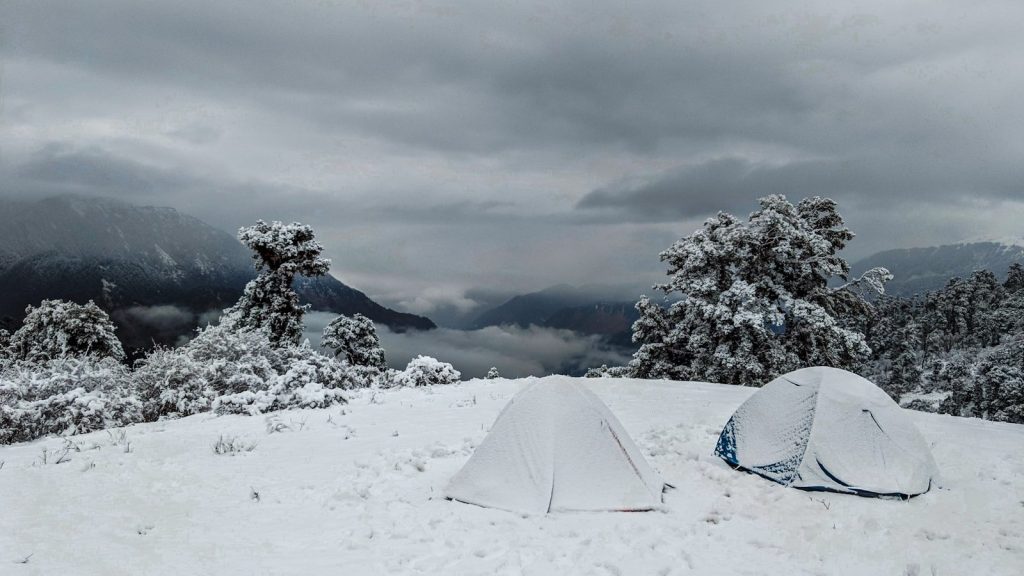
There is an incredible, serene majesty to the winter wilderness. When a thick blanket of snow quietens the forest, the crowds disappear, the air turns crisp, and you are left with absolute off-grid isolation. Pitching a tent in a snowy wonderland and watching the twilight hit frozen peaks is an unmatched outdoor experience.
However, once the temperature drops below freezing, the wilderness stops being forgiving. In sub-zero conditions, physical comfort and safety are governed strictly by the laws of thermodynamics. A single weak link in your gear—such as an uninsulated sleeping mattress, a freezing gas stove fuel canister, or cotton clothing that traps cold sweat—can rapidly escalate into acute hypothermia or frostbite.
To enjoy cold-weather camping safely, your packing strategy must shift from loose, casual preparation to a systematic, freeze-proof checklist. Organize your gear into dedicated thermal and survival systems to ensure your winter basecamp functions like a warm, insulated fortress.
Here is the professional, vetted winter camping checklist to conquer the snowpack in total comfort and safety.
The Sub-Zero Basecamp Operational System Matrix
| Gear System | Sub-Zero Environmental Hazard | Engineering Defensive Strategy | Key Technical Hardware Goal |
| 1. Sleep & Insulation | Severe ground conduction heat vacuum | Stack high thermal resistance barriers | Double pad stack (R-value 6.0+) |
| 2. Shelter & Fire | Snow load collapse & howling arctic winds | Deploy rigid structural frames & dry heat | 4-Season double-wall dome / Wood stove |
| 3. Water & Fuel | Freeze-locked filters, ice water, low gas pressure | Shift to unfreezable liquid fuels & heat zones | Liquid white gas stove & insulated bottles |
| 4. Apparel Matrix | Sweat saturation & flash-freeze post-hike | Modular technical synthetic & down layering | Zero cotton; hydrophobic merino/polyester |
Top 4 Winter Camping Upgrades Vetted on Amazon
1. The Invincible Cold-Weather Dome: GEERTOP 4-Season 2-Person Tent
Standard summer mesh tents cannot support heavy snow loads and allow freezing arctic drafts to sweep directly across your sleeping face. You need a sealed, structurally reinforced winter shelter.
-
Why It Wins: The GEERTOP 4-Season tent is engineered specifically for winter survival. Built with double-stitched 210T anti-tear polyester, it features a full-perimeter snow skirt that seals the bottom edges to block freezing winds and blowing snow. It relies on high-tensile aluminum poles to withstand heavy snow accumulation and incorporates a dual-wall design to channel interior respiration condensation away from your sleeping bag.
2. The Unfreezable Culinary Workhorse: Coleman Dual Fuel 2-Burner Stove
In sub-zero conditions, standard propane-butane gas canisters lose internal pressure, producing a weak, sputtering flame that cannot melt ice or boil water. You need a liquid fuel engine.
-
Why It Wins: This legendary Coleman stove runs on clean-burning liquid white gas (or unleaded gasoline), pumped manually to maintain high internal operating pressure down to 40F. It generates a roaring, windproof flame that boils high-capacity pots of snow in minutes, making it the ultimate reliable winter basecamp cooking platform.
3. The Ultimate Sub-Zero Thermal Mattress: Therm-a-Rest NeoAir XTherm NXT (R-7.3)
When sleeping on ice or frozen ground, cold conduction will drain your body heat exponentially faster than the freezing ambient air around you.
-
Why It Wins: Boasting a staggering, laboratory-verified R-value of 7.3, the XTherm NXT provides elite thermal insulation. It utilizes patented reflective barriers to bounce your body’s radiant heat directly back to your skin while isolating the freezing ground cold below. It delivers this extreme insulation in a highly packable, lightweight design that compresses to the size of a one-liter bottle.
4. The Heavy-Duty Backcountry Snow Shovel: Backcountry Access (BCA) Dozer 1T Shovel
You cannot pitch a tent safely on top of loose, uneven powder snow, and a sudden blizzard can quickly bury your tent walls, blocking vital air intake vents.
-
Why It Wins: Built with heat-treated 6061 T6 aluminum, this lightweight, packable shovel features an incredibly rigid, flat blade designed to carve out clean, flat tent platforms in hard, packed snow. The telescoping shaft allows for high-leverage digging, making it a critical safety tool to clear snow drift lines around your camp.
The Ultimate Winter Camping Checklist
Use this structured system to ensure 100% cold-weather preparation before packing your vehicle:
1. Sleep & Shelter System (The Warm Oasis)
-
[ ] 4-Season Tent (with reinforced aluminum poles and snow stakes)
-
[ ] Heavy-Duty Ground Footprint Tarp (to protect the tent floor from sharp ice)
-
[ ] High-Insulated Sleeping Pad (R-Value 5.0+ or Stacked System) (see our R-Value guide)
-
[ ] Winter-Rated Sleeping Bag (comfort rated at least 10°F to 15°F lower than expected night temps)
-
[ ] Down Booties & Sleep Socks (merino wool; strictly dedicated for sleeping)
-
[ ] Thermal Water Bottle (Nalgene) (to use as a hot-water sleeping radiator)
2. Cooking, Fuel & Hydration (The Snow-Melting Matrix)
-
[ ] Liquid White Gas or Multi-Fuel Stove (plus spare liquid fuel bottles)
-
[ ] Insulated Water Bottle Sleeves (to prevent drinking water from freeze-locking)
-
[ ] Large Stainless Steel Cooking Pot (ideal for melting high volumes of snow)
-
[ ] Long-Handled Spoon / Spatula
-
[ ] Vacuum-Insulated Food Jar & Thermos (to keep camp meals and hot drinks piping hot)
-
[ ] Biodegradable Soap & Scraper (no wet sponges; they freeze solid instantly)
3. Tactical Apparel (The Zero-Cotton Layering System)
-
[ ] Heavyweight Merino Wool or Synthetic Base Layers (2 sets: 1 for hiking, 1 dry set for sleeping)
-
[ ] Midweight Thermal Fleece / Grid Jacket (for active insulation)
-
[ ] High-Loft Down Parka with Hood (your defensive shield for inactive camp tasks)
-
[ ] Waterproof Windproof Outer Shell Jacket & Pants (to block wind chill and wet snow)
-
[ ] Windproof Gloves & Heavy-Duty Insulated Mittens
-
[ ] Fleece Balaclava & Thermal Beanie
-
[ ] Waterproof Gaiters (to keep snow out of your hiking boots)
4. Navigation, Tools & Utility
-
[ ] Aluminum Snow Shovel (for camp prep and clearing drifts)
-
[ ] Microspikes / Crampons (for traction across icy paths)
-
[ ] Cold-Resistant Headlamp (plus lithium-ion backup batteries; stored in warm inner pockets)
-
[ ] Rechargeable Portable Power Station (insulated inside your sleeping bag at night)
-
[ ] Snow Brush / Ice Scraper (for clearing solar panels and vehicles)
5. Medical, Safety & Hygiene
-
[ ] Comprehensive First-Aid Kit (including hand warmers and space blankets)
-
[ ] Specialized Dog First-Aid Kit (essential if camping with a dog)
-
[ ] UV-Blocking Polarized Sunglasses / Goggles (to prevent snow blindness)
-
[ ] High-SPF Sunscreen & Lip Balm (to protect against intense snow-reflected UV)
-
[ ] Toilet Paper & Waste Disposal Bags (waste must be packed out; you cannot dig frozen cat holes)
3 Critical Tactical Protocols for Sub-Zero Campsites
1. Execute the “Be Bold, Start Cold” Layering Protocol
When stepping out of your warm vehicle onto a freezing trailhead, your natural instinct is to wrap yourself inside your heaviest down parka. This is a critical tactical error. Within 15 minutes of hiking with a loaded pack, your large leg and back muscles generate immense heat, causing you to sweat.
-
The Hazard: Wet sweat is the absolute enemy of winter survival. Water conducts heat 25 times faster than air. Once you stop moving to pitch your tent, that trapped sweat drops to freezing temperatures, triggering shivering and rapid hypothermia.
-
The Protocol: Strip down to just your synthetic base layer and a windproof outer shell before you start hiking. You should feel slightly chilly standing at the trailhead. Keep your heavy down jacket at the very top of your waterproof backpack, ready to throw over your dry clothes the exact minute you stop moving to set up camp.
2. Lock Down the “Toe-Box Electronic/Filter” Sleeping Rule
Cold sub-zero air slow-drains the chemical reaction inside lithium-ion batteries, forcing them to lose up to 50% of their charge overnight. Furthermore, any residual moisture inside hollow-fiber water filters will expand as it freezes, micro-tearing the internal glass membranes and rendering the filter useless without your knowledge.
-
The Protocol: Never leave your smartphone, headlamp, camera batteries, or water filter inside your tent mesh pockets or pack overnight. Place them inside a small, breathable dry-bag and slip them directly into the toe box of your sleeping bag before you go to sleep. Your body heat will keep these systems warm, insulated, and fully functional.
3. Master the “Drown the Snow” Melting Sequence
When melting clean, dry snow to make drinking water, you cannot simply fill a dry, hot pot with fluffy snow and crank up your stove flame.
-
The Hazard: Snow is highly porous, filled with trapped air pockets that act as a thermal insulator. If you place dry, fluffy snow into a hot metal pot, the heat will scorch the bottom of the pan, burning the dry ice crystals and giving your resulting drinking water a terrible, bitter chemical taste.
-
The Protocol: Always keep a “seed” of liquid water (roughly 1 to 2 inches) at the bottom of your cooking pot. Turn on your winter camp stove, let the liquid water heat up, and then slowly add packed blocks of clean snow to the hot bath. The snow will melt instantly into the liquid pool, preserving your cookware and delivering clean, sweet water.
FAQ: Outsmarting Winter Camping Hurdles
Q: Why can’t I breathe inside my sleeping bag to warm up my face?A: When you exhale, your breath releases hot, highly concentrated water vapor. Breathing inside your sleeping bag forces that warm moisture to settle directly into the down feathers of your bag’s insulation. Over the course of the night, that moisture will freeze into a layer of frost, collapsing the delicate down clusters and destroying the sleeping bag’s ability to retain your body heat. Always keep your nose and mouth exposed to the open tent air, and wear a soft fleece balaclava to protect your face.
Q: How do we go to the bathroom when the ground is frozen solid?A: In deep winter environments, digging a standard 6-inch soil cat-hole to bury human waste is physically impossible due to rock-hard, frozen permafrost. Furthermore, waste buried in snow does not decompose and will melt out in the spring, contaminating water sources. You must implement a strict “Pack It Out” protocol. Carry specialized waste-neutralizing gel bags (like WAG Bags), seal your waste securely inside scent-proof containers, and dispose of them in proper garbage facilities back in town.
Final Thoughts
Winter camping is an incredibly rewarding, quiet adventure that showcases the wild at its most pristine, but its success rests entirely on your respect for the laws of physics. By upgrading your cold-weather inventory away from loose blankets and summer tents toward an engineered sub-zero system—featuring an R-7.3 insulated pad, an unfreezable liquid dual-fuel stove, a snow-gartered 4-season tent, and strict thermal layering discipline—you completely conquer the variables that cause trail emergencies. Protect your batteries from the night freeze, keep your water filters close to your body heat, and melt your snowpacks systematically. Gear up with absolute technical precision, respect the elements, and enjoy the ultimate peace of winter glamping with unconditional safety and confidence!
Winter Backpacking Tips: The Sub-Zero Wilderness Survival Blueprint
Disclaimer: As an Amazon Associate, I earn from qualifying purchases. Check local avalanche forecasts and trail conditions thoroughly before heading into deep snowpacks, stay warm, leave no trace!