
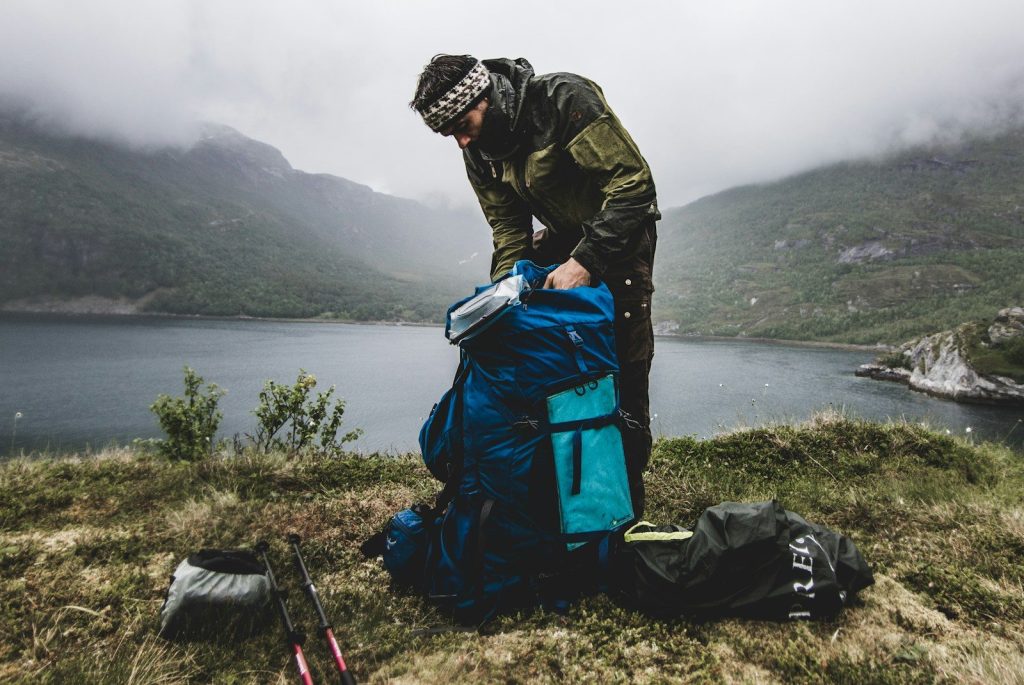
A poorly packed backpack is a hiker’s worst enemy. If the heavy items are too low, the pack will pull on your shoulders. If they are too high, you’ll feel off-balance on rocky terrain. Learning the “Zone Method” of packing will make a 30lb load feel like 20lb and keep your gear organized for quick access.
With more people moving toward Minimalist Gear, knowing how to utilize every cubic inch of your pack is a vital skill. Here is the professional guide to packing like a pro.
The Zone Method: A Layer-by-Layer Guide
Zone 1: The Bottom (Light & Bulky)
Items you won’t need until you reach camp at the end of the day.
-
What to Pack: Your Sleeping Bag, Sleeping Pad (if inflatable), and extra clothes for sleeping.
-
The Goal: This creates a structural “base” for the rest of your gear to sit on.
Zone 2: The Middle – Close to Back (Heavy Items)
The center of gravity should be as close to your spine as possible, between your shoulder blades.
-
What to Pack: Your Bear Canister filled with food, your Camping Stove, and extra water.
-
The Goal: Keeping the heaviest weight close to your back prevents the pack from pulling you backward.
Zone 3: The Middle – Outer (Mid-Weight)
Items you might need during a long break, but not while walking.
-
What to Pack: Your Family Tent (or the rainfly), your Camping Kettle, and extra fuel.
-
The Goal: Wrap these around the heavy items to prevent them from shifting.
Zone 4: The Top & Pockets (Essentials)
Items you need throughout the day or in an emergency.
-
What to Pack: Your Down Jacket (for chilly breaks), First Aid Kit, map, and snacks.
-
The Goal: Easy access without unzipping the entire bag.
Backpack Packing Blueprint
| Zone | Items | Weight Level | Access Needs |
| Bottom | Sleeping Bag / Pad | Light | Low (Camp only) |
| Middle-Back | Food / Water / Stove | Heavy | Moderate |
| Middle-Outer | Tent / Cookware | Medium | Moderate |
| Top | Jacket / Rain Gear | Light | High |
| Side Pockets | Water Bottles / Poles | Light | Immediate |
| Hip Belt | Sunscreen / Snacks | Tiny | Immediate |
3 Pro-Tips for a Perfect Carry
-
Use Compression Straps: Once your bag is packed, pull all the straps tight. This pulls the load closer to your body and prevents gear from “jiggling,” which saves you energy on every step.
-
Fill the Voids: Don’t leave empty air inside your pack. Stuff your Merino Wool Socks inside your Camping Kettle. Wrap your towel around your stove. A “tight” pack is a stable pack.
-
The “Tip Test”: Once packed, stand your backpack on the floor. If it tips over immediately, the weight is unbalanced. It should be able to stand relatively upright on its own.
FAQ: Backpack Organization
Q: Should I use a pack cover or dry bags?
A: Most hikers prefer Ultralight Dry Sacks inside the bag. A pack cover can act like a sail in high winds and often lets water leak down the back panel.
Q: Where do I put my tent poles?
A: If they don’t fit inside, slide them into the side pocket and secure them with the compression straps. However, many Modern Tents have short poles designed specifically to fit horizontally inside a pack.
Final Thoughts
Packing is an art form. The more you do it, the more you’ll find a “home” for every piece of gear. When your pack is balanced, you can stop worrying about your back and start looking at the view.
Disclaimer: As an Amazon Associate, I earn from qualifying purchases. Hike light, hike right!
Read too: Top 5 Best Hiking Backpacks for 2026: Carry Your Gear in Comfort