
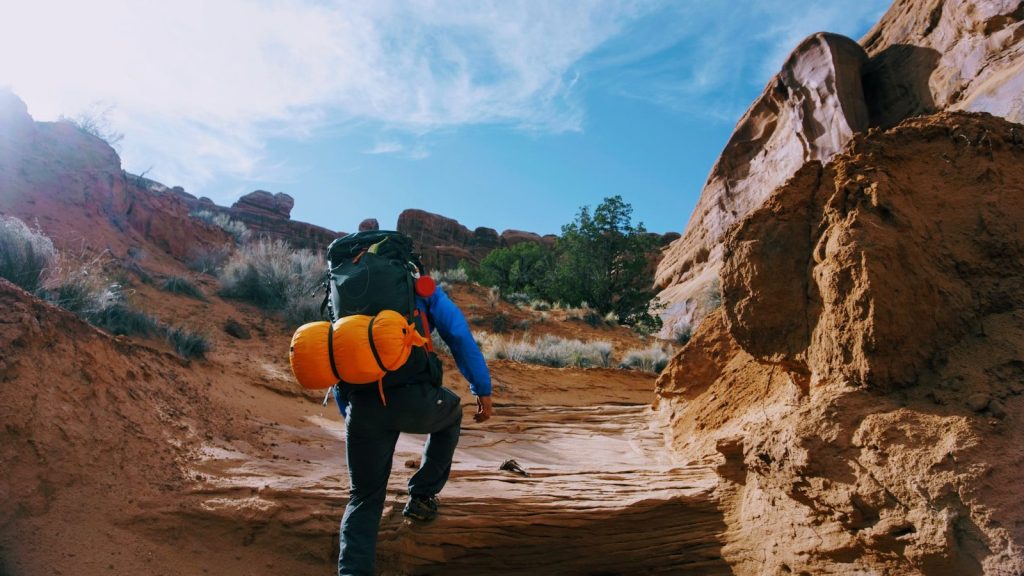
When you are deep into a 15-mile backcountry trek with steep elevation gains, your biggest enemy isn’t the terrain—it’s the volume and weight inside your backpacking pack. Traditional camping gear is bulky, heavy, and hogs space, leaving you no room for food, water filtration systems, or safety essentials.
The secret to a lighter pack and longer miles is minimizing your sleep system. Thanks to 2026 textile innovations, you no longer have to sacrifice a good night’s sleep to save space. By combining ultra-compressible insulation, high-R-value fabrics, and micro-valves, you can fit an entire three-season sleep setup into the bottom compartment of a compact pack.
Here is the best, field-tested compact sleeping gear available on Amazon to help you shrink your load.
The Micro-Sleep System Matrix
An optimized compact sleep system consists of three interlocking parts: an ultra-packable pad, a highly compressible quilt or bag, and a pocket-sized pillow.
| Gear Category | Traditional Size | Compact Standard | Key Benefit |
| Sleeping Pad | Size of a rolled yoga mat | Size of a 12oz soda can | Frees up massive internal pack space |
| Insulation | Large 15L stuff sack | Size of a 1-liter water bottle | Maximum warmth-to-weight ratio |
| Camp Pillow | Bulky foam/home pillow | Size of a pack of cards | Prevents neck fatigue without bulk |
Top 3 Compact Sleeping Gear Solutions on Amazon
1. Best Compact Sleeping Pad: Therm-a-Rest NeoAir XLite NXT
The undisputed champion of the ultralight backpacking world. It packs down to the size of a standard one-liter water bottle while offering a winter-ready R-value of 4.5 and a plush 3 inches of thickness.
-
Why We Like It: Therm-a-Rest updated this version to be 83% quieter than previous models (no more crinkling potato-chip bag noises). It offers premium ground insulation in a package that weighs just 13 ounces.
2. Best Ultra-Compressible Sleeping Bag: Sea to Summit Spark Down Bag
If you want to save maximum space, high-fill power down is mandatory. The Sea to Summit Spark uses 850+ Loft premium goose down treated with an anti-moisture polymer.
-
Why We Like It: It compresses down to an incredibly small 2.5-liter volume bag. It balances minimalist weight with thermal draft tubes along the zippers to prevent heat loss.
3. Best Pocket Pillow: Sea to Summit Aeros Premium Pillow
Sleeping on a bundle of dirty hiking clothes inside a jacket sleeve is a recipe for a stiff neck. The Aeros Premium solves this problem while occupying zero space.
-
Why We Like It: It inflates in just a few breaths via a multi-functional mini-valve and packs down into a tiny storage pouch that fits in the palm of your hand. The soft synthetic exterior wicks away face sweat.
3 Rules for Compressing Gear Without Damaging It
-
Ditch the Heavy Stuff Sacks: Factory-issued sleeping bag sacks are often loose and bulky. Upgrade to a dedicated silicone-coated compression sack with heavy-duty tension straps. This allows you to crank down on the down feathers, crushing air pockets and reducing the storage volume by up to 40%.
-
Never Store Down Compressed at Home: Compression is only for the trail. When you return home from your trip, hang your down bag in a closet or store it in a large, breathable mesh laundry bag. Keeping down tightly compressed for months flattens the feathers, permanently ruining its ability to loft and trap body heat.
-
The “Stuff” Rule: Never fold or roll a down sleeping bag before putting it into a compression sack. Roll lines create consistent stress points on the fabric and down clusters. Instead, literally stuff it in randomly, footbox first. This distributes the pressure evenly.
The Ultimate Space-Saving Hack: Switch to a Camping Quilt
If you want to shave off an extra 30% of weight and bulk, look into a top backpacking quilt instead of a traditional mummy sleeping bag.
-
The Science: When you lie inside a traditional sleeping bag, your body weight crushes the insulation underneath you. Crushed insulation cannot trap air, meaning the bottom of your sleeping bag does not actually keep you warm (that is the job of your Therm-a-Rest pad).
-
The Compact Advantage: Technical quilts eliminate the bottom fabric and zipper entirely. They latch directly onto your sleeping pad via elastic straps, keeping you just as warm while packing down to nearly half the size of a standard bag.
FAQ: Ultralight Sleep Systems
Q: Are ultra-thin, compact sleeping pads easy to puncture?
A: Because they use lightweight nylon (typically 20D to 30D ripstop), they require more care than thick car-camping pads. Always clear your tent footprint of sharp sticks, pine needles, and rocks before setting up your budget tent, and always carry a mini patch kit.
Q: Can synthetic insulation pack down as small as down?
A: No. While modern high-end synthetics (like PrimaLoft) are closing the gap, down feathers still possess an unmatched natural structure that allows them to compress significantly smaller and last many years longer without breaking down.
Final Thoughts
Transitioning to a compact sleep system is the single fastest way to transform your backpacking experience. Trading a bulky, heavy setup for a highly compressible Sea to Summit Spark bag, a palm-sized Aeros pillow, and a soda-can-sized NeoAir pad lightens your physical burden and lets you focus on what really matters: enjoying the pristine, remote wilderness.
Disclaimer: As an Amazon Associate, I earn from qualifying purchases. Pack light, go far!