
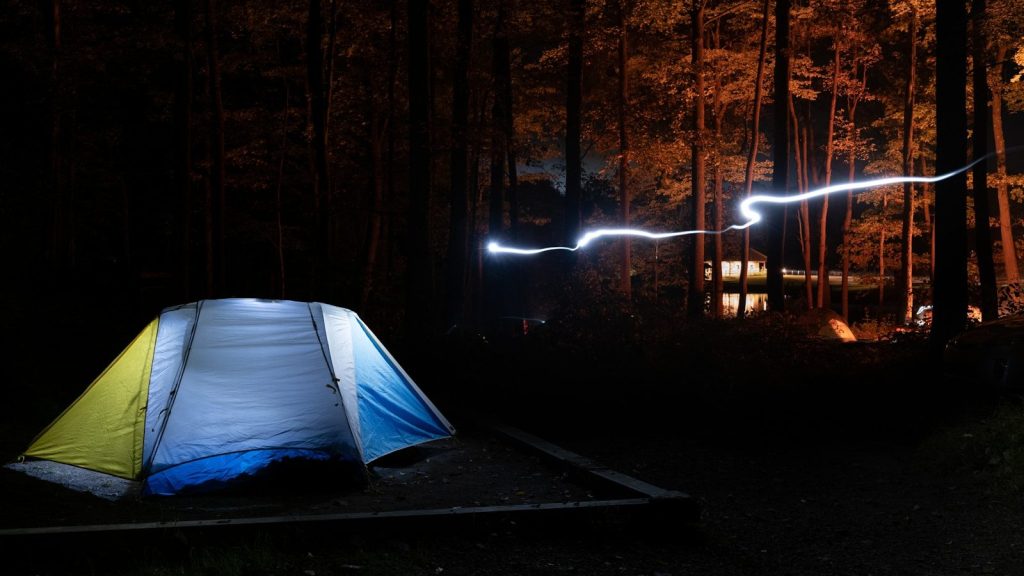
When setting up a wilderness perimeter, your general illumination systems like standard headlamps or soft aesthetic canvas glamping lanterns are designed for predictable, routine tasks. But when a sudden severe storm shears your tent guylines, a flash flood forces an immediate midnight evacuation, or your vehicle’s electrical system completely dies in a remote off-grid zone, your lighting needs instantly shift from comfort to survival.
In a genuine backcountry emergency, standard rechargeable consumer lights introduce dangerous vulnerabilities. If you encounter a multi-day tracking situation or an unexpected power outage, a dead internal lithium battery renders your hardware useless.
True emergency camping lights are engineered around absolute mechanical redundancy. Built with high-impact, shock-resistant bodies, extreme waterproof ratings, and hyper-efficient circuit boards, these life-support tools feature multi-source power matrices—utilizing solar panels, standard disposable cells, or hand-crank kinetic dynamos to guarantee lumens when everything else fails.
Based on structural run-times, multi-fuel autonomy, and tactical distress features, here are the top 5 emergency camping lights available on Amazon vetted to conquer worst-case scenarios.
The Emergency Backcountry Illumination Matrix
| Emergency Light Model | Power Architecture | Max Lumens | Max Run-Time (Low) | Emergency Signaling | Best For |
| Goal Zero Lighthouse 600 | Li-ion / Hand-Crank / Solar | 600 lumens | 320 Hours | Directional / Flash | Absolute Off-Grid Prep |
| LuminAID PackLite Max | Solar Panel / USB-C | 150 lumens | 50 Hours | Flash SOS Matrix | Backpacking Bug-Out Kits |
| Streamlight Super Siege | Heavy Rechargeable (AC/USB) | 1,100 lumens | 348 Hours | Independent Red SOS | Sub-Zero Severe Storms |
| UST 30-Day Duro LED | 3 D-Cell Alkaline Batteries | 700 lumens | 720 Hours (30 Days) | SOS Beacon Cycle | Long-Term Blackout Static Base |
| Glocusent 135LED | 5,000 mAh USB-C Core | 1,200 lumens | 80 Hours | Beacon / Strobe | Budget Compact Survival Kits |
Top 5 Emergency Camping Lights Vetted on Amazon
1. The Undefeated King of Redundant Power: Goal Zero Lighthouse 600 Lantern
When a disaster strips away access to the electrical grid, a survival light is only as reliable as its ability to harvest energy manually. The Lighthouse 600 is the ultimate insurance policy.
-
Why It Wins: This brilliant lantern features a built-in, fold-out mechanical hand-crank dynamo. If the internal 5,200 mAh lithium battery drains fully, turning the handle for one minute generates enough raw kinetic energy to run the light on low for 10 minutes. It handles variable solar charging inputs, features stable fold-down legs, and incorporates a USB output hub to recharge emergency safety phones.
2. The Unsinkable Inflatable Inflatable Shield: LuminAID PackLite Max 2-in-1 Solar Lantern
For minimalist hikers and survivalists packing a dedicated bug-out bag inside a waterproof trail backpack where heavy, rigid glass lanterns take up too much vital weight.
-
Why It Wins: Designed originally for humanitarian disaster relief zones, the PackLite Max is a completely inflatable, floating cube made of heavy-duty TPU plastic. It collapses down entirely flat into a slim, 1-inch thick pocket tile. It features an integrated high-efficiency monocrystalline solar panel on its top face, allowing it to recharge passively on your pack frame during the day. It is completely dustproof, submersible (IP67), and floats on water automatically if dropped.
3. The Industrial Submersible Brute: Streamlight Super Siege Rechargeable Lantern
If you are facing severe, chaotic storms, vehicle accidents, or extreme cold fronts where your gear will get thrown against hard granite rocks or dropped into mud.
-
Why It Wins: Streamlight builds tactical-grade instruments, and the Super Siege is an absolute tank. Encased in a thick, impact-resistant polymer armor shell with a rubber base, it can survive 2-meter drops onto concrete effortlessly. It punches out a blinding 1,100 lumens of light and features a dedicated array of low-wavelength red LEDs for preserving night vision and a flashing red SOS beacon that can run continuously for days.
4. The Long-Distance Endurance Champion: UST 30-Day Duro LED Lantern
For long-term static emergencies, winter blackouts, or basecamps where you need continuous, low-intensity safety light for weeks without touching a charging cable.
-
Why It Wins: The naming of this lantern is entirely literal: running on three standard, inexpensive D-cell alkaline batteries, the UST Duro can burn continuously on its low mode for an incredible 30 full days (720 hours) straight. The outer rubberized cover provides great water resistance, and the inner globe can be removed entirely to turn the lantern into an open down-light inside a large family cabin tent.
5. The Ultimate Compact Budget Value: Glocusent 135LED Camping Lantern
An exceptional, hyper-compact survival resource that packs the lighting power of an industrial floodlight into a chassis the size of a standard soda can.
-
Why It Wins: Clocking in at less than 9 ounces, the Glocusent punches way above its budget profile by utilizing over 100 high-density LEDs to pump out 1200 lumens of broad ambient illumination. Fueled by a built-in 5,000 mAh USB-C rechargeable battery core, it can run for up to 80 hours on its low setting and serves as a highly reliable travel emergency charger.
3 Critical Tactical Protocols for Emergency Illumination
Owning a high-performance survival light is only half the battle; you must understand how to manage your optical assets to ensure signaling visibility and circuit longevity under stress:
1. Leverage the “Chamber Chimney” Hanging Reflection Method
When an emergency forces you inside your shelter during a heavy storm, placing a high-power lantern flat on the tent floor or table creates harsh, blinding glare at eye level while leaving the corners of the structure in deep shadows.
-
The Protocol: Always hang your emergency lantern directly from the highest center ceiling loop of your tent or vehicle frame. For maximum dispersion, remove the external frosted globe diffuser if your model allows it (like the UST 30-Day Duro), casting the light directly downward like a household ceiling fixture. This eliminates shadows, reduces eye strain, and lets you monitor medical kits or repair gear with full spatial accuracy.
2. Isolate and Manage the Dual-Fuel Storage Rules
If you choose an emergency lantern that relies on disposable alkaline batteries (like the UST Duro or a classic Coleman), never store the lantern permanently in your gear box with the batteries installed inside the terminal bays.
-
The Chemical Threat: Over months of storage under varying temperatures inside a hot car trunk or cold garage, alkaline batteries naturally off-gas, causing toxic potassium hydroxide to leak from the casings. This corrosive white crust completely ruins the spring steel terminals, leaving your light dead when an emergency hits. Always store your emergency cells inside a separate, sealed ziplock bag right next to the lantern body.
3. Master the Visual Geometry of the Red SOS Beacon
When attempting to signal for rescue or alert emergency vehicles during a dark trail situation, running a high-power white strobe light can bounce off surrounding fog, rain sheets, and dense pine trees, blinding you and reducing your situational awareness.
-
The Protocol: Switch your light to its dedicated flashing Red SOS mode. Red light waves feature a much longer physical wavelength on the electromagnetic spectrum, allowing the beam to cut through dense mist, smoke, and downpours significantly better than white light without reflecting harsh glare back into your eyes. Place the signaling beacon on the highest structural surface available (such as your vehicle roof or an elevated trail rock).
FAQ: Outsmarting Backcountry Blackouts
Q: Can I charge a solar emergency lantern inside my vehicle dashboard window?
A: While it is tempting to lay your solar lantern (like the LuminAID) on your dashboard while driving, it is highly inefficient. Modern automotive windshields are treated with heavy UV-blocking laminate films to protect interior plastics from fading. Because solar panel charging circuits rely directly on UV spectrum wavelengths to stimulate electron transfer, charging your device behind treated car glass can slow down the process by up to 70% to 80%. Always mount your solar gear externally on your pack or a clear campsite rock in direct, unfiltered sunlight.
Q: What is the optimal lumen output setting during a long survival situation?
A: In a true emergency where rescue timelines are unknown, lumens are a currency you must spend carefully. Blasting a lantern on a full 1,000-lumen turbo mode will typically deplete an internal battery within 2 to 4 hours. Drop your light setting down to its lowest efficient baseline (typically 10 to 30 lumens). This provides more than enough structural light to read maps, navigate inside a tent, and manage first-aid tasks while extending your battery lifespan from hours to weeks.
Final Thoughts
When managing a survival event, information, structural organization, and visibility are your ultimate tools. Upgrading your emergency gear parameters from generic decorative stock lights to engineered, multi-fuel survival anchors like the hand-cranked Goal Zero Lighthouse 600, the indestructible Streamlight Super Siege, or the long-running UST 30-Day Duro eliminates the dangerous variables of dead battery failures. Secure your dual-fuel assets separate from your terminals, master your red signaling vectors, and step out onto the wilderness trails knowing with 100% technical certainty that you can conquer the darkest backcountry emergencies with absolute confidence!
Lantern vs Headlamp: The Ultimate Backcountry Illumination Guide
Disclaimer: As an Amazon Associate, I earn from qualifying purchases. Check your battery expiration dates annually before your major seasonal trips, stay visible, hike safe, leave no trace!