
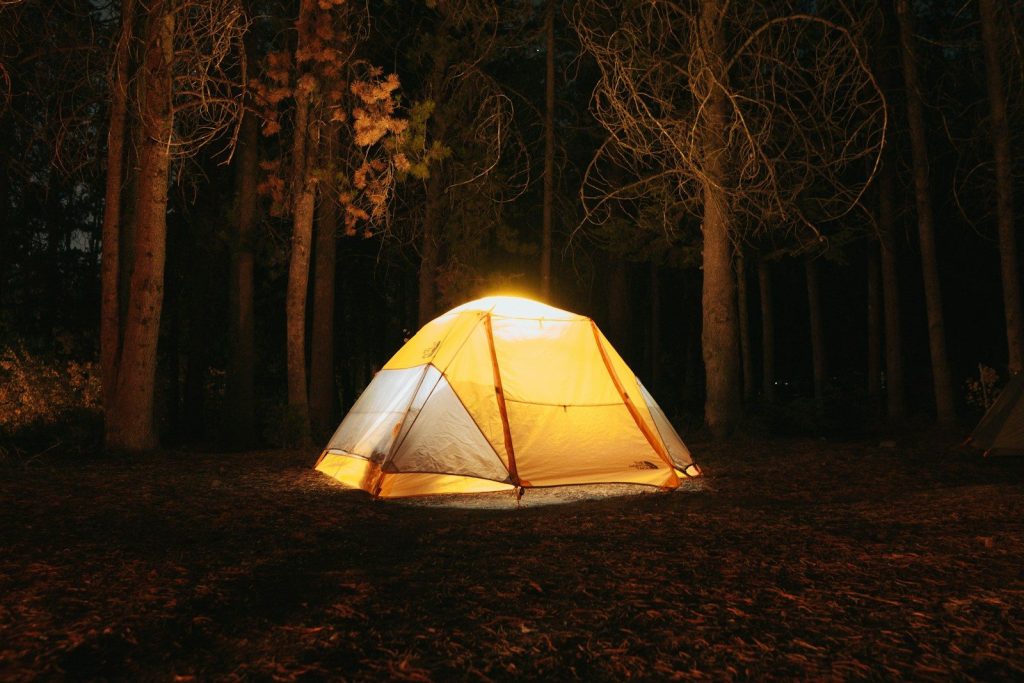
When the sun sets in the wilderness, darkness is absolute. A single flashlight won’t cut it if you’re trying to cook dinner, pitch a tent, or find your way to the bathroom at 2 AM. A professional lighting setup uses a “layered approach”: task lighting for work, ambient lighting for the camp, and emergency lighting for safety.
LED technology and lithium-ion batteries have made camping lights smaller, brighter, and longer-lasting. Here is how to design the perfect lighting system for your next trip.
Layer 1: Task Lighting (The “Hands-Free” Rule)
This is the light you need to actually do things—cooking, hiking, or repairing gear.
-
The Hero: Black Diamond Storm 500-R Headlamp. A headlamp is mandatory. It keeps your hands free to hold a Camping Kettle or a map.
-
The Pro Move: Look for a headlamp with a Red Light Mode. Red light preserves your night vision and won’t attract swarms of bugs to your face.
Layer 2: Ambient Lighting (The “Social” Glow)
Ambient light illuminates the entire campsite so you don’t feel like you’re sitting in a dark hole.
-
The Lantern: LuminAID PackLite Max. As we discussed in our Solar Lantern Guide, these are perfect for placing on a picnic table.
-
The Mood: MPOWERD Luci Solar String Lights. These 18-foot LED strings can be hung between trees or across your Family Tent. They provide a soft, even glow that makes the campsite feel magical.
Layer 3: Tent Lighting (Inside the Shelter)
Lighting inside a tent should be soft and diffused to prevent harsh shadows.
-
The Solution: Nite Ize Radiant 300 Rechargeable Lantern. Hang it from the center hook of your tent.
-
The Hack: If you don’t have a lantern, strap your headlamp (facing inward) to a translucent Nalgene Water Bottle. The water will diffuse the light, creating a soft glowing orb that lights up the whole tent.
Camping Lighting Comparison Table
| Light Type | Best For | Brightness (Lumens) | Power Source |
| Headlamp | Cooking / Hiking | 300 – 500 | Rechargeable / AAA |
| Solar Lantern | Group Table | 100 – 150 | Solar / USB |
| String Lights | Atmosphere | 100 | Solar |
| Spotlight | Safety / Search | 1000+ | Internal Battery |
| Tent Light | Reading / Sleep | 50 – 100 | USB |
3 Rules for Campsite Etiquette
-
Mind the Lumens: You don’t need a 2000-lumen spotlight to roast marshmallows. High-intensity lights ruin the experience for other campers nearby. Use only as much light as you need.
-
Point it Down: When wearing a headlamp, remember to tilt it downward when talking to someone. Blinding your campmates with a 500-lumen beam is the fastest way to lose friends!
-
Light Out by 10 PM: Follow the “Quiet Hours” rule. Turn off the big lanterns and string lights by 10 PM, switching to a low-power red light if you’re still up.
FAQ: Battery and Power
Q: Should I use alkaline or rechargeable batteries?
A: In 2026, Rechargeable Lithium-Ion is the standard. They perform better in the cold and save you money. Just bring a Portable Power Bank to top them off during a 3-day trip.
Q: How many lumens do I really need?
A: For general camp tasks, 100–200 lumens is plenty. For technical hiking at night, you’ll want 400+ lumens.
Final Thoughts
A mix of a reliable Headlamp and a few Solar String Lights is the perfect setup for 90% of campers. It’s functional, eco-friendly, and creates an atmosphere that makes camping feel like a luxury getaway.
Disclaimer: As an Amazon Associate, I earn from qualifying purchases. Stay bright, stay safe!
Read too: Top 5 Powerful Power Banks & Solar Panels for Wild Camping