
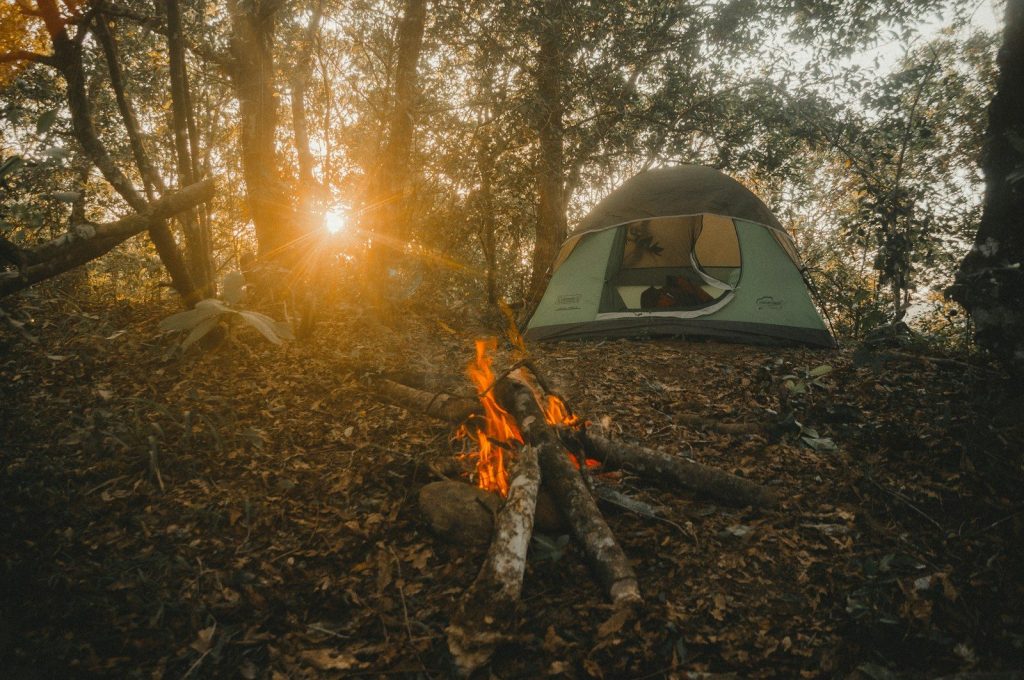
A campfire can reach temperatures of 1,100°C (2,000°F). That’s enough to melt aluminum and ignite dry grass from several feet away. Fire safety isn’t just about common sense—it’s about following strict local regulations designed to protect our remaining wild spaces.
Here is how to enjoy the warmth of a fire without becoming a headline on the evening news.
1. Know Before You Glow: Check Restrictions
Before you even pack your lighter, check the fire status of your destination.
-
Stage 1 Restrictions: Fires only allowed in designated steel rings.
-
Stage 2 Restrictions: No campfires allowed at all. You can only use gas stoves with an “on/off” switch.
-
Red Flag Warning: High winds and low humidity. Even if fires are legally allowed, don’t start one.
2. Setting Up the “Safe Zone”
If fires are permitted, follow the 10-foot rule:
-
Clear the area: Ensure there is a 10-foot diameter of bare dirt around your fire pit. Remove dry leaves, pine needles, and grass.
-
Check the canopy: Look up. Ensure there are no low-hanging branches within 15 feet of the flames.
-
Distance from Gear: Keep your tent and backpacks at least 15 feet away. Embers love to melt synthetic fabrics.
3. Top Fire Safety Gear
If you want the flame without the risk, consider these modern alternatives available on Amazon:
-
Solo Stove Bonfire 2.0: A smokeless fire pit that contains embers and burns wood more efficiently.
-
BioLite FirePit+: Uses a built-in fan to ensure a clean, hot burn with zero smoke and better control.
-
Outland Living Propane Fire Pit: The gold standard for “fire-ban-friendly” camping. It creates a beautiful flame with zero embers and can be shut off instantly.
4. The “Drown, Stir, Feel” Method
Most wildfires caused by campers happen because the fire “looked out” but was still smoldering underground.
-
Drown: Pour water until the hissing sound stops completely. Don’t just use dirt—sand and dirt can actually insulate heat and keep embers hot for hours.
-
Stir: Use a camp shovel to mix the ashes and water. Ensure every stick and coal is saturated.
-
Feel: Hover the back of your hand over the ashes. If it’s too hot to touch, it’s too hot to leave.
Campfire Safety Comparison
| Method | Safety Rating | Best For | Risk Factor |
| Designated Ring | High | Established Sites | Escaping Embers |
| Smokeless Pit | Very High | Backyard/Car Camping | Heavy to carry |
| Propane Fire Pit | Highest | Fire Ban Areas | Running out of gas |
| Stone Ring | Low | Emergency only | Root fires |
3 Critical Fire Rules
-
Keep it Small: A “bonfire” is for movies. A camping fire should be no larger than 2 feet wide and 2 feet high. Small fires are easier to control and extinguish.
-
Never Leave it Alone: It takes exactly 10 seconds for a gust of wind to carry an ember into a dry bush. If you go to bed or go for a hike, the fire must be dead out.
-
No Trash: Never burn plastic, cans, or foil. Not only does it release toxic fumes, but lightweight trash like paper can float out of the fire while still burning, starting a fire elsewhere.
FAQ: Fire Safety Emergencies
Q: What do I do if a fire jumps the ring?
A: Use your fire extinguisher or a large bucket of water immediately. If it spreads beyond your control in more than 60 seconds, call emergency services and evacuate.
Q: Can I use “fire starters”?
A: Yes, waterproof fire starters are safer than using gasoline or lighter fluid, which can cause flare-ups and explosions.
Final Thoughts
A responsible camper is a safe camper. Use a portable fire pit if you can, always keep a bucket of water nearby, and never underestimate the power of a single spark. Let’s keep our forests green for the next generation of explorers.
Disclaimer: As an Amazon Associate, I earn from qualifying purchases. Burn responsibly!