
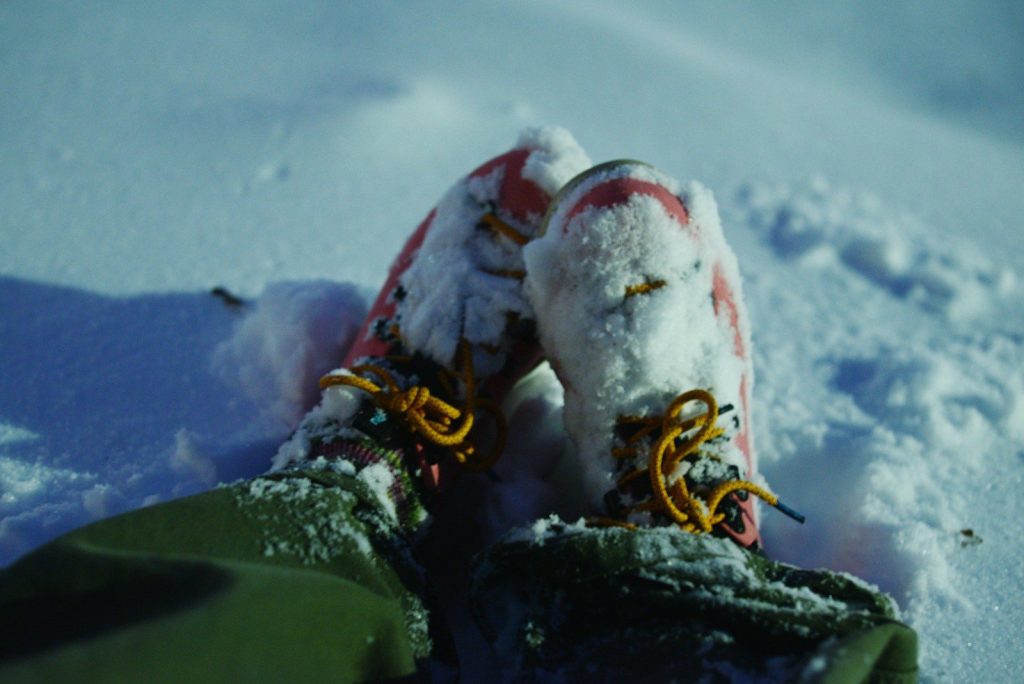
When stepping onto a snow-covered singletrack trail or scrambling across frozen alpine shale, your footwear is the absolute foundation of your safety. In cold-weather backcountry environments, a standard pair of 3-season budget hiking shoes introduces severe risks. Their soft rubber outsoles harden into slick plastic under freezing temperatures, their breathable mesh uppers let cold slush soak your socks, and their lack of thermal insulation can trigger frostbite within hours.
True winter hiking boots are purpose-built winter fortresses for your feet. They integrate specialized thermal synthetic insulation (typically 200g to 400g ratings), heavy-duty waterproof breathable membranes, and specialized cold-weather rubber compounds engineered to maintain flexibility and bite aggressively into sheet ice and packed snow.
Furthermore, a great winter boot provides rigid ankle support to carry heavy payloads in your waterproof winter backpack and features reinforced heel/toe ridges to lock traction spikes and snowshoe bindings securely in place.
From insulated athletic crossover hikers to heavy-duty sub-zero expedition boots, here are the top 5 winter hiking boots available on Amazon vetted for thermal performance, waterproofing, and ice grip.
The Winter Trail Footwear Performance Matrix
| Winter Boot Model | Insulation Package | Waterproof Membrane | Outsole Traction Tech | Target Temperature Index | Best Used For |
| Salomon Quest Winter TS CSWP | 200g Thinsulate™ | ClimaSalomon™ Waterproof | Winter Contagrip® | Down to $-4^\circ\text{F}$ ($-20^\circ\text{C}$) | Technical Alpine Snow Hikes |
| Merrell Thermo Chill Mid WP | 200g Lightweight Low-Bulk | Merrell Dry Membrane | M Select™ GRIP Ice | Down to $-20^\circ\text{F}$ ($-29^\circ\text{C}$) | Best Value 3-Season Winter |
| Columbia Bugaboot III | 200g High-Loft Thermal | Injection-Molded Shell | Omni-Grip™ Non-Marking | Down to $-25^\circ\text{F}$ ($-32^\circ\text{C}$) | Deep Snowdrifts & Basecamp |
| Oboz Bridger 7″ Insulated | 200g 3M™ Thinsulate™ | B-DRY Waterproof System | Granite Peak Winter Rubber | Down to $-10^\circ\text{F}$ ($-23^\circ\text{C}$) | Rugged Rocky Winter Trails |
| Vasque Snowburban II UltraDry | 400g 3M™ Thinsulate™ | UltraDry™ Waterproofing | Nordic Rover Vibram® | Down to $-40^\circ\text{F}$ ($-40^\circ\text{C}$) | Deep Freeze & Snowshoeing |
Top 5 Winter Hiking Boots Vetted on Amazon
1. The Undefeated King of Technical Winter Mobility: Salomon Quest Winter TS CSWP
For fast-moving winter hikers, alpine scramblers, and snowshoers who require the precise athletic agility and foot guidance of a mountain boot with full thermal protection.
-
Why It Wins: Built on Salomon’s legendary Quest trekking chassis, this boot offers unmatched foot wrap and ankle stabilization. Packed with 200g of Thinsulate™ insulation and wrapped in a protective ClimaSalomon™ waterproof bootie, it keeps your feet bone-dry in deep slush. The specialized Winter Contagrip® outsole utilizes a soft rubber compound with deep, sharp lugs that remain supple in freezing temperatures, biting deep into packed snow and loose ice.
2. The Unbeatable Budget Value Champion: Merrell Thermo Chill Mid Waterproof
If you want elite brand quality, reliable waterproofing, and proven winter warmth without breaking the $150 threshold.
-
Why It Wins: Merrell took their iconic Moab boot architecture and fully winterized it. The Thermo Chill features a polyurethane-coated leather and mesh upper lined with 200g of low-bulk insulation to trap body heat without causing excessive foot sweat. Its contoured kinetic insole provides great arch support for long days carrying heavy winter gear checklist loads, while the protective rubber toe cap guards your toes against hidden rocks beneath the snowpack.
3. The Classic Deep-Snow Workhorse: Columbia Bugaboot III
For winter campers, snowshoers, and hikers facing deep snowdrifts and sub-zero temperatures where maximum coverage and thermal reflection are required.
-
Why It Wins: The Bugaboot series is an industry legend. Featuring a heavy-duty injection-molded waterproof rubber lower shell paired with a high-cut leather shaft, it blocks deep snow from reaching your ankles completely. It incorporates 200g of high-loft insulation and utilizes Columbia’s Techlite™ lightweight midsole for high energy return, keeping your feet warm down to an impressive -25F.
4. The Rugged Leather Backcountry Fortress: Oboz Bridger 7″ Insulated BDry
For serious backpackers who trek across jagged, frozen granite trails and demand indestructible full-grain leather durability with custom arch support.
-
Why It Wins: Oboz is world-famous for including high-end, anatomically molded O FIT Insoles™ straight out of the box, eliminating the need for aftermarket insoles. Wrapped in waterproof full-grain leather, the Bridger 7″ features 200g of 3M Thinsulate™, a freeze-resistant rubber toe cap, and a winterized Granite Peak outsole infused with silica micro-particles to improve traction on wet, glazed ice.
5. The Extreme Sub-Zero Expedition Armor: Vasque Snowburban II UltraDry
For arctic explorers, winter peak-baggers, and hikers venturing into brutal -30F to -40F climates where standard 200g insulated boots fail.
-
Why It Wins: When extreme cold hits, the Snowburban II is your ultimate defensive shield. It doubles the standard thermal package by packing a massive 400g of 3M™ Thinsulate™ Ultra insulation inside its waterproof leather chassis. It features a high 8-inch ankle collar to lock out snowdrifts, a molded rubber heel ledge designed specifically to lock snowshoe strap bindings in place, and a Nordic Rover Vibram® rubber outsole for unyielding stability across frozen terrain.
3 Critical Rules for Winter Footwear Sizing & Management
To prevent frostbite, friction blisters, and premature boot degradation on sub-zero trails, implement these three scientific rules into your winter routine:
1. Enforce the “Socks-Plus-Air” Sizing Expansion Rule
Buying winter boots in your exact summer sneaker size is a critical, high-risk error.
-
The Thermodynamic Hazard: In sub-zero weather, you will wear thick merino wool winter socks. If your boot is sized too small, your thick socks will compress tight against the interior walls, squeezing out the dead air space needed for thermal insulation. Furthermore, tight boots restrict arterial blood circulation to your toes, causing your feet to freeze rapidly regardless of how much insulation the boot contains.
-
The Protocol: Always size up your winter hiking boots by one-half to one full size larger than your standard 3-season shoe size. When wearing your thickest winter socks, you should still be able to wiggle your toes freely inside the toe box. This dead air pocket acts as a secondary insulation chamber warmed by your body heat.
2. Pair Boots with Waterproof Trail Gaiters in Deep Snow
Even the most expensive $300 waterproof winter boot will fail if deep snow packs over the top of the ankle collar.
-
The Hazard: As you break trail through deep powder snow, your pant legs ride up, forcing snow down inside the top collar of your boot. Your body heat instantly melts that trapped snow into freezing water, saturating your wool socks and ruining your insulation matrix for the rest of the day.
-
The Protocol: Always wear a pair of breathable, waterproof Tall Winter Gaiters (such as Outdoor Research Crocodiles). The gaiter seals the junction between your pants and the upper shaft of your boot, creating an impenetrable snow shield that keeps your lower legs and sock tops 100% dry.
3. Always Dry Boots Privately via Convection—Never Direct Heat
After a long day logging miles over frozen trails, your boots will hold micro-moisture from internal foot sweat.
-
The Material Hazard: Placing your technical leather and synthetic winter boots directly next to a roaring winter camp stove or a hot fireplace to dry them fast is a disastrous mistake. Extreme direct radiant heat will melt the polyurethane waterproof glues, shrink and crack the natural leather uppers, and warp the internal rubber midsoles permanently.
-
The Protocol: Remove the insoles completely, open the lacing system wide, and stuff the interior of the boots tightly with dry newspaper or a micro-fiber towel to draw out interior humidity passively overnight inside your tent vestibule or home.
FAQ: Outsmarting Winter Trail Footwear Hazards
Q: Do I still need microspikes if my winter boots have “ice grip” soles?
A: Yes, absolutely on solid glaze ice. While advanced winter outsoles (like Winter Contagrip® or Vibram® Arctic Grip) offer incredible traction on cold packed snow, wet slush, and frosted rocks, no soft rubber compound can replace stainless steel teeth on hard, pure sheet ice or frozen waterfall crossings. Always carry a pair of dedicated MICROspikes / Traction Cleats in your emergency winter kit to stretch over your boots when encountering solid glaze ice on steep switchbacks.
Q: What is the difference between 200g and 400g insulation in winter boots?
A: The “gram” rating (g) refers to the weight per square meter of the synthetic insulation fabric (like Thinsulate™), not the weight of the boot itself.
-
200g Insulation: Ideal for active winter hiking, snowshoeing, and fast-moving trails in temperatures ranging from 30F down to –10F (-1C to -23C). It prevents overheating and sweating during high exertion.
-
400g Insulation: Designed for extreme cold, low-activity environments, static winter basecamps, ice fishing, or deep freeze temperatures dropping below -20F down to -40F (-29C to -40C).
Final Thoughts
Conquering frozen backcountry trails safely requires moving away from summer sneakers toward engineered, insulated winter platforms. Upgrading your cold-weather footwear inventory to technical workhorses like the agile Salomon Quest Winter, the budget-friendly Merrell Thermo Chill, or the extreme sub-zero Vasque Snowburban II eliminates the dangerous risks of wet socks, slipping on icy trails, and freezing toes. Size your boots generously to preserve blood circulation, lock out deep snow with waterproof gaiters, and pair your tread with microspikes on pure ice sheets. Step out onto the frozen singletrack loops with absolute physical warmth, rock-solid stability, and total confidence!
Best Budget Hiking Shoes: Vetted High-Traction Trail Footwear
Disclaimer: As an Amazon Associate, I earn from qualifying purchases. Routinely treat your leather winter boot uppers with durable water repellent (DWR) sprays post-trip, stay warm, leave no trace!