
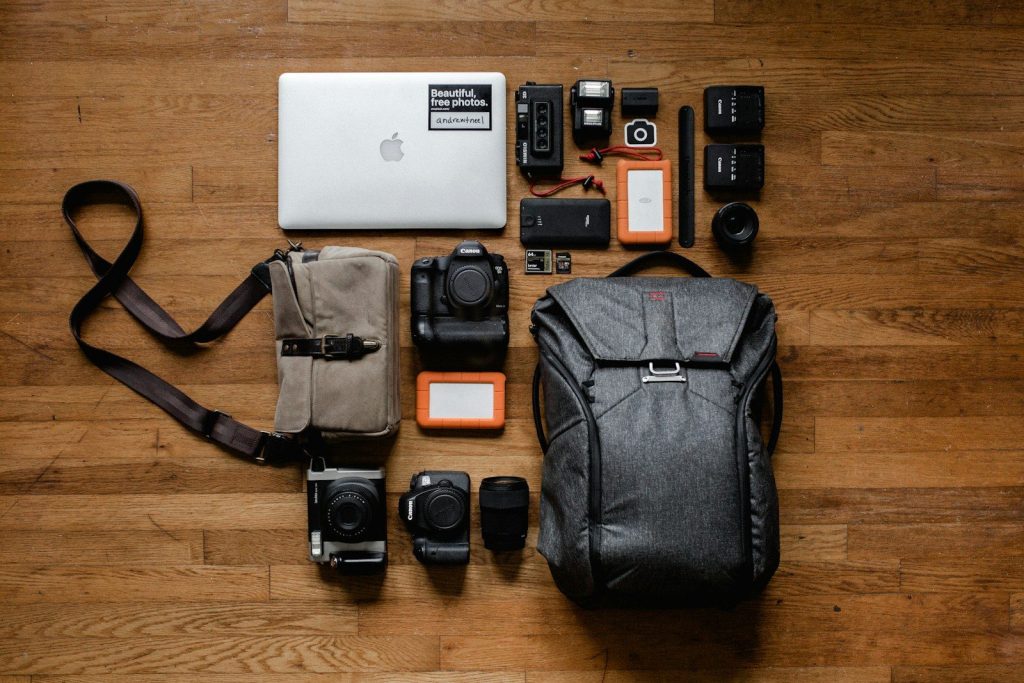
For outdoor photographers, filmmakers, and content creators, hiking into a remote wilderness perimeter introduces a brutal equipment paradox. To capture high-end, gallery-quality landscape prints or cinematic 4K B-roll, you must haul an incredibly heavy, fragile, and astronomically expensive payloads of glass and electronics. Between mirrorless bodies, fast $f/2.8$ telephoto lenses, carbon-fiber tripods, drones, and stabilizer gimbals, your spine easily supports thousands of dollars in technical assets.
If you pack this gear inside a standard nylon backpacking pack, your lenses will violently knock against each other, filters will crack under pressure, and you will be forced to fully unpack your entire kit onto wet mud or snow just to pull out a single camera body.
True technical camera backpacks eliminate this friction at the structural level. Built with impact-resistant foam matrices, shockproof dividers, weather-sealed ballistic shells, and advanced harness systems, these packs function as mobile, indestructible studios. They keep your bodies and lenses completely isolated from impact while giving you rapid access to capture the perfect shifting mountain light before it disappears.
From extreme high-altitude backcountry haulers to streamlined travel daypacks, here are the top 5 camera backpacks available on Amazon vetted for protection, speed, and ergonomics.
The Creative Gear Protection & Access Matrix
| Camera Pack Model | Internal Volume Capacity | Core Material Shield | Primary Camera Access | Best Used For | Standout Structural Feature |
| Shimoda Explore V2 35 | 35 Liters | 420D Carbonate Ripstop | Rear Panel & Fast Side | Deep Wilderness Trails | Multi-adjustable torso harness |
| Peak Design Everyday 30L | 30 Liters | 400D Double-Poly Nylon | Dual-Side Panel Windows | Hybrid Travel / Commutes | FlexFold origami divider walls |
| Lowepro ProTactic 450 | 25 Liters | FormShell Molded Armor | 4-Point Multi-Access | Tactical Pro Shooters | Built-in SlipLock modular webbing |
| PGYTECH OneMo 2 35L | 35L (Expandable to 42L) | Waterproof PU Laminate | Wide Rear & Double Side | Drone & Filmmaker Crews | Includes independent internal sling |
| Tarion Pro PB-01 Case | Massive Dual Compartment | 1200D High-Density Nylon | Full Front & Fast Side | Heavy Lenses & Budget | Hard-shell perimeter impact armor |
Top 5 Camera Backpacks Vetted on Amazon
1. The Ultimate High-Altitude Wilderness King: Shimoda Explore V2 35 Starter Kit
If you are logging huge miles over steep switchbacks to shoot sunset peaks, standard city camera bags will ruin your shoulders. You need a pack engineered like an alpine trekking chassis.
-
Why It Wins: The Explore V2 35 is widely considered by pro landscape photographers to be the finest outdoor camera pack on Earth. It features a robust internal frame that transfers heavy weight seamlessly down to your pelvis, coupled with an adjustable shoulder harness to match your exact torso length. The pack uses removable modular Core Units (cubes) to shield your gear, features an incredibly tough, water-repellent carbonate shell, and opens fully from the back panel so your shoulder straps stay clean and dry out of the dirt.
2. The Gold Standard for Versatility and Aesthetics: Peak Design Everyday Backpack 30L V2
For hybrid digital creators who constantly shift environments—moving from a client meeting or flight terminal straight onto a rugged mountain trail.
-
Why It Wins: The Everyday Backpack is a masterpiece of minimalist industrial design. It completely eliminates traditional boxy foam grids, relying instead on patented FlexFold dividers that snap into place instantly to match your changing lens layouts. With dual side panels, you can swing the pack around on one shoulder and swap a lens in seconds without setting the bag down on the wet ground. The clean exterior doesn’t look like a camera bag, preventing you from becoming a target for gear theft.
3. The Unyielding Tactical Armor Vault: Lowepro ProTactic BP 450 AW II / III
For photojournalists, event shooters, and wildlife photographers who carry heavy gear loads and require instantaneous access from every angle.
-
Why It Wins: Built like a military asset, the ProTactic relies on Lowepro’s hard-shelled FormShell technology to protect delicate camera cages from severe drops and crushing forces. It delivers an incredible 4-point access matrix: you can pull your primary body from the hardened top turret, the left side, the right side, or the full rear panel. The exterior is wrapped in heavy SlipLock loop webbing, allowing you to attach exterior lens pouches, tripods, and water bottle holders modularly.
4. The Filmmaker & Drone Pilot’s Dream Machine: PGYTECH OneMo 2 Professional 35L
For modern multi-media creators who carry a complex mix of mirrorless cameras, heavy zoom lenses, standard handheld gimbals, and foldable drones.
-
Why It Wins: The OneMo 2 features a brilliant, customizable internal storage system with massive expansion capabilities, swelling from 35 liters to 42 liters via an expandable front pocket. The back panel incorporates an advanced scientific mesh ventilation grid to prevent back sweat during long summer treks. A major bonus: it includes an entirely independent, fully padded internal shoulder sling bag that you can slide out for quick, ultra-lightweight scouting missions.
5. The Heavy-Duty Budget Value Fortress: Tarion Pro PB-01 Large Camera Backpack
An exceptional, highly rugged choice for entry-level professionals, hobbyists, and outdoor students who need industrial-strength protection without the luxury price tag.
-
Why It Wins: Built from ultra-dense 1200D weather-resistant nylon, the Tarion Pro features a dual-compartment structure that keeps your camera gear completely separated from your personal camp supplies. It utilizes a thick, reinforced internal divider network that holds up to two DSLR bodies and six additional prime lenses securely. It includes a dedicated, padded 15.6-inch laptop pocket and a heavy-duty side strap configuration to lock down large tripods.
3 Critical Tactical Protocols for Backcountry Camera Security
To ensure your expensive digital sensors survive the elements and operate flawlessly under demanding field conditions, implement these three rules into your routine:
1. Lock Down the “Rear-Panel Default” Ground Habit
When you arrive at a shooting location on the trail, it is highly instinctive to lay your backpack flat on its back panel to unzip the front cover, exactly like a standard school bookbag. Break this habit immediately.
-
The Hazard: Laying the back panel down directly onto muddy trail dirt, wet morning grass, or sharp gravel allows debris to stick to the shoulder straps and lumbar padding. When you put the pack back on, that abrasive mud and moisture transfers directly onto your and skin, causing chafing and extreme discomfort over long trail miles.
-
The Protocol: Only purchase outdoor camera packs that utilize 180-degree Rear-Panel Access. You lay the pack down flat on its front face. Your harness straps stay facing safely upward, completely clean, dry, and protected from the elements.
2. Balance Your Optics over your Center of Gravity
Camera lenses are essentially dense blocks of heavy leaded glass and metal alloy casings. If you pack all your heavy f/2.8 zoom lenses at the absolute top or the far bottom-outer edge of your backpack, you destroy your body’s kinetic equilibrium.
-
The Hazard: Packing heavy weight too high causes the bag to act like a pendulum, swaying violently and pulling you off-balance during slippery river crossings. Packing it too low drags your shoulders backward, straining your lower lumbar discs.
-
The Protocol: Position your absolute heaviest pieces of gear—such as a 70-200mm f/2.8 or a 100-400mm telephoto lens—directly against the spine wall of the pack, horizontally aligned with your upper lumbar and mid-back region. Place lightweight items like memory cases, batteries, and rain jackets in the top pockets, and your sleeping kit at the absolute base.
3. Implement the Silica-Gel Condensation Defense
When executing a shoot in freezing [winter backpacking conditions], moving your warm camera directly inside a sealed, warm tent or vehicle creates an aggressive physical reaction. The cold air inside the lens glass collides with the ambient indoor humidity, triggering instant condensation inside the internal lens elements and electronic contact boards. This can trap moisture behind the glass, ruining your optics with lens fungus over time.
-
The Protocol: Before stepping inside a warm tent or cabin, seal your camera and lenses securely inside their padded backpack chambers while still out in the cold air. Throw two or three heavy-duty, rechargeable Silica Gel Desiccant Packets directly inside the camera cube. Allow the backpack to slowly acclimate to the warm indoor room temperature over two hours; the silica packets will instantly catch any micro-moisture vapor before it can settle onto your delicate digital sensors.
FAQ: Outsmarting Backcountry Camera Hazards static
Q: Can I fly with these large professional camera backpacks as airline carry-ons?
A: Yes. The Shimoda Explore V2 35, Peak Design 30L, and PGYTECH OneMo 2 are specifically engineered to comply with standard domestic and international airline carry-on dimensional size matrices. However, always ensure your heavy carbon-fiber tripod is fully unbolted and stowed inside your checked luggage, as airport security can occasionally flags tripods as potential security hazards in the main cabin.
Q: Are technical camera backpacks 100% waterproof during a heavy storm?
A: While fabrics like Shimoda’s Carbonate Ripstop or Peak Design’s polyurethane coatings reject heavy rain drops effortlessly, no camera zipper track is completely submersible unless it features an industrial scuba-grade dry zipper. During an aggressive, multi-hour tropical downpour or blizzard, always pull out and wrap the pack inside its specialized All Weather (AW) Rain Cover. This creates a completely seamless plastic envelope shield that stops moisture from weeping through the needle stitching.
Final Thoughts
Your camera gear is the bridge that lets you share the stunning, raw majesty of the wilderness with the rest of the world. But to keep those creative tools functional and pristine over miles of unforgiving terrain, you must protect them with professional, purpose-built hardware. Upgrading your transit layout to a specialized, high-performance camera fortress like the anatomically balanced Shimoda Explore V2, the fast-access Peak Design 30L, or the armored Lowepro ProTactic removes all the constant anxiety of trail impacts and sudden mountain rainstorms. Balance your weight profiles systematically, protect your back harness from dirt, and conquer the most demanding wilderness singletracks knowing with 100% technical certainty that your gear is completely secure. Focus your mind, capture your angles, and create your ultimate masterworks with total confidence!
Best Waterproof Hiking Backpacks: Vetted Storm-Proof Trail Packs
Disclaimer: As an Amazon Associate, I earn from qualifying purchases. Clean your camera sensor lenses with dedicated technical air blowers—never compressed air, stay creative, leave no trace!