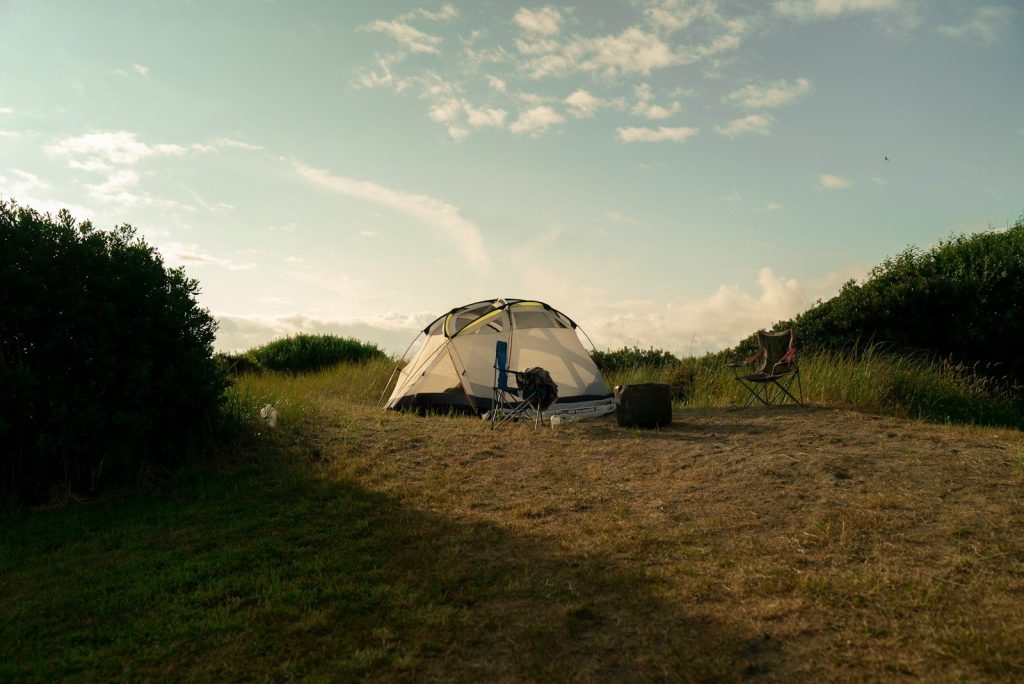
Finding the perfect spot to pitch your tent is more of an art than a science. A bad choice can lead to a night of sliding off your sleeping pad, battling wind, or—worst of all—waking up in a puddle. Whether you are at an established campground or “dispersed camping” in the deep wilderness, where you put your tent matters.
In this guide, we’ll walk you through the “Look Up, Look Down, Look Around” method to help you find a safe, flat, and scenic home for the night.
1. Look Down: The Foundation of Sleep
The quality of your sleep starts with what’s directly beneath your tent floor.
-
Find the Flatness: Even a tiny 2-degree slope can cause you to slide down your sleeping pad all night. Always place your head at the “uphill” end of any slope.
-
Drainage is Key: Avoid depressions or “bowls” in the ground. If it rains, these spots become temporary ponds. Look for slightly elevated ground.
-
Surface Matters: Sand and pine needles are soft and comfortable. Rock and hard-packed dirt are colder and require a high-quality Sleeping Pad.
-
Check for Hazards: Before you roll out your tent, clear the area of sharp rocks, pinecones, and sticks that could puncture your tent floor.
2. Look Up: The “Widowmaker” Check
Safety starts above your head. This is the most critical step that many beginners skip.
-
Avoid Dead Trees: Look for dead branches or “standing dead” trees (often called “widowmakers”). A gust of wind at 2 AM could bring a heavy branch down on your tent.
-
Lightning Safety: Avoid the very highest point in the area, but also avoid standing alone under the tallest tree.
-
Morning Sun: If you want to wake up warm, position your tent where the morning sun will hit it. If you want to sleep in, find a spot with western shade.
3. Look Around: Comfort and Convenience
Now that you’re safe and flat, think about the logistics of your stay.
-
The 200-Foot Rule: To protect water sources and your own safety, always camp at least 200 feet (about 70 steps) away from lakes and streams.
-
Wind Protection: Use natural windbreaks like large boulders or thick bushes. Avoid camping in “saddles” between mountains, as wind tunnels through these gaps.
-
Privacy: At a busy campground, look for sites with natural vegetation between you and your neighbors.
-
The Bathroom Situation: If there are no facilities, ensure you are far enough away from your camp (and water) to follow Leave No Trace principles.
Campsite Selection Checklist
| Feature | What to Look For | Why It Matters |
| Slope | Perfectly flat or head-high | Prevents sliding and headaches |
| Vegetation | Durable surfaces (dirt, gravel) | Protects fragile plants |
| Water | 200 feet away | Protects water quality and avoids bugs |
| Overhead | No dead branches | Life-saving safety measure |
| Wind | Natural barriers | Keeps your tent quiet and warm |
4. Essential Gear for a Better Site
Sometimes the “perfect” site needs a little help from your gear.
-
The Leveling Trick: If you have to camp on a slight slope, put your extra clothes or empty backpack under your sleeping pad on the “downhill” side to level it out.
-
Better Stakes: Hard ground? You’ll need Steel Tent Stakes that won’t bend.
-
The “Footprint”: Protect your tent from rough ground with a Heavy Duty Tarp.
-
Lighting: Once you’ve chosen your spot, use a LED Lantern to mark your “kitchen” and “bedroom” areas.
FAQ: Campsite Dilemmas
Q: What if the only flat spot is right next to a trail?
A: Avoid it if possible. It’s poor etiquette and reduces your privacy. Try to stay at least 100 feet back from trails to let others enjoy the feeling of wilderness.
Q: Is it better to camp in the forest or in an open meadow?
A: Forests are warmer and offer wind protection. Meadows have better views and fewer bugs (if there’s a breeze), but they get much colder at night as heat escapes into the open sky.
Final Thoughts
Choosing a campsite is a skill that improves with every trip. Remember: Safety first (Look Up), Comfort second (Look Down), and Logistics third (Look Around). Take 10 extra minutes to find the right spot—your back and your safety will thank you.
Read too: How to Plan a Camping Trip: A Step-by-Step Guide
Disclaimer: As an Amazon Associate, I earn from qualifying purchases. Respect the land, enjoy the stay!