
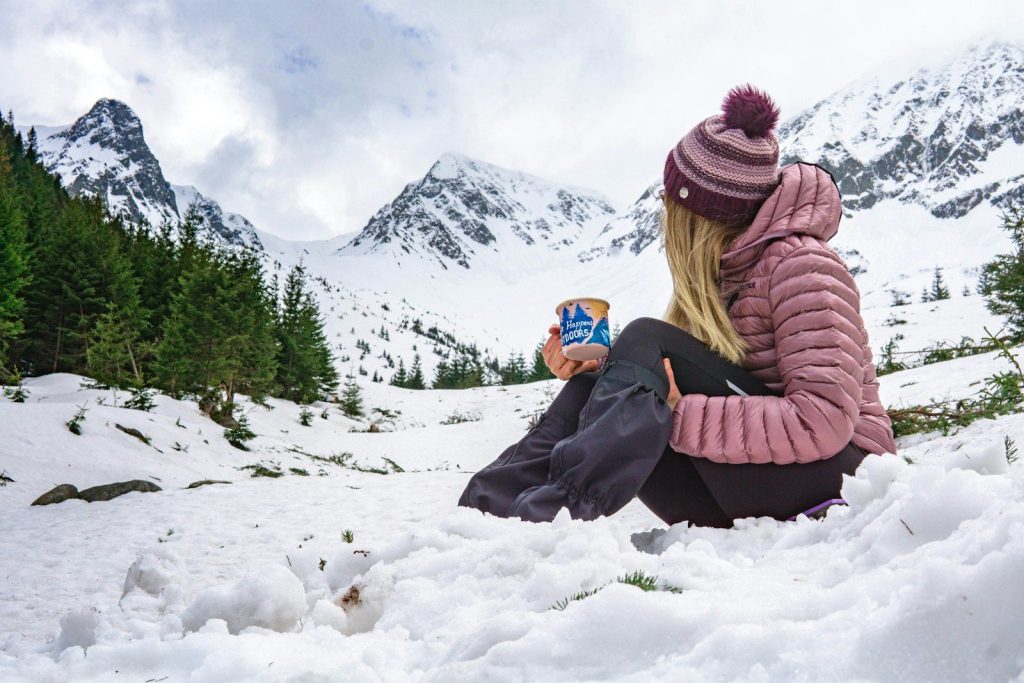
In the winter wilderness, “Cotton is King of Cold.” If your clothes get damp from sweat or snow, they stop insulating and start stealing your body heat. The secret to staying comfortable at -10°C or -20°C is the Three-Layer System. This allows you to add or remove layers as your activity level changes, preventing the sweat that leads to hypothermia.
Here is the professional clothing protocol for surviving and thriving in the frost.
1. The Base Layer (Moisture Management)
This layer sits directly against your skin. Its only job is to wick sweat away.
-
The Material: Merino Wool or high-quality synthetics. Never use cotton.
-
Why it works: Merino wool stays warm even when damp and naturally resists odors, which is vital for a long-distance trek.
2. The Mid Layer (Insulation)
This layer traps your body heat in tiny pockets of air.
-
The Gear: A Down Jacket for static warmth (around camp) or a Heavyweight Fleece for active movement.
-
The Strategy: For extreme cold, you might use two mid-layers—a thin fleece for hiking and a thick “puffy” jacket to put on immediately when you stop to set up your 4-season tent.
3. The Outer Shell (Weather Protection)
Your shield against wind, snow, and freezing rain.
-
The Material: A breathable, waterproof fabric like Gore-Tex.
-
Why it matters: Wind chill can make 0°C feel like -15°C. A high-quality Hard Shell Jacket breaks the wind and prevents snow from melting into your insulating layers.
4. The “Extremities” (Head, Hands, and Feet)
You lose a significant amount of heat through your head and through poor circulation in your limbs.
-
Head: A windproof Beanie and a Buff/Neck Gaiter.
-
Hands: Use a liner glove for dexterity and a waterproof Mitten for maximum warmth.
-
Feet: As discussed in our Winter Footwear Guide, wear thick wool socks and ensure your boots aren’t too tight, which can restrict blood flow.
Winter Layering Quick-Reference Table
| Layer | Recommended Material | Function | When to Wear |
| Base | Merino Wool | Wick Sweat | Always |
| Mid (Active) | Grid Fleece | Breathable Warmth | While Hiking |
| Mid (Static) | 800-Fill Down | Maximum Loft | At Camp |
| Shell | Hard Shell | Wind/Snow Block | During Storms/Wind |
| Pants | Softshell | Stretch & Breathability | High Activity |
3 Golden Rules for Winter Clothing
-
Avoid the Sweat: If you feel yourself getting hot while hiking, unzip your jacket or remove a layer before you start to sweat. Moisture is your enemy.
-
Dry Your Socks at Night: Put your damp hiking socks inside your sleeping bag (near your core). Your body heat will dry them out by morning.
-
The “Puffy” Rule: As soon as you stop moving for more than 5 minutes, put on your heavy down jacket. It’s much easier to stay warm than to get warm once you’ve cooled down.
FAQ: Cold Weather Apparel
Q: Can I wear leggings under my hiking pants?
A: Yes, but ensure they are thermal leggings. If they are too tight, they can actually compress your insulation and make you colder.
Q: Are mittens better than gloves?
A: For extreme cold, yes. Mittens keep your fingers together, generating more shared heat. However, they lack dexterity for tasks like using a water filter.
Final Thoughts
In winter, your clothing is your life-support system. By investing in a high-quality Merino Base Layer and a versatile Hard Shell, you can turn a freezing night into a cozy adventure. Stay dry, stay warm, and keep exploring!
Best Winter Camping Gear: Essential Equipment for Cold-Weather Adventures
Disclaimer: As an Amazon Associate, I earn from qualifying purchases. Happy winter trails!