
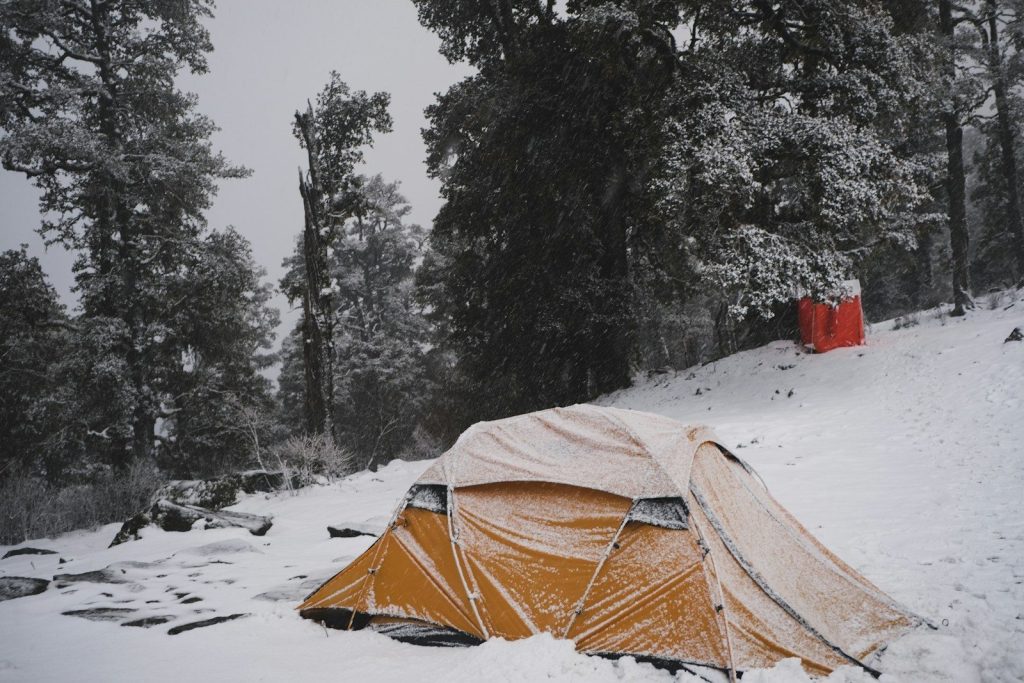
Winter camping isn’t about “fighting” the cold; it’s about managing your body’s heat like a precious resource. With the rise of Ultralight Winter Gear, cold-weather camping has become more accessible, but the physics of hypothermia remain the same. Heat is lost through four ways: radiation, conduction, convection, and evaporation.
Here is the professional protocol to keep your internal “furnace” burning all night long.
1. The “R-Value” Defense (Conduction)
The cold ground is a heat-sink that will suck the warmth right out of your body.
-
The Strategy: Don’t rely on just one pad. Use a “Double Stack” method. Place a Closed-Cell Foam Pad (R-Value ~2.0) on the bottom and an Inflatable Insulated Pad (R-Value 4.0+) on top.
-
Why it works: This creates a massive thermal barrier that prevents conduction between your body and the frozen earth.
2. Feed the Fire (Metabolic Heat)
Your body produces heat by burning calories. If you go to bed hungry, you will wake up cold.
-
The Rule: Eat a high-fat, high-protein snack right before crawling into your Winter Sleeping Bag. A spoonful of peanut butter or some cheese works like slow-burning coal for your internal heater.
-
Hydration: As noted in our Winter Hydration Guide, dehydration makes it harder for your blood to circulate warmth to your fingers and toes.
3. The “Boiling Water Bottle” Hack
This is the most effective low-tech secret in winter camping.
-
The Method: Fill a leak-proof Nalgene Bottle with near-boiling water, wrap it in a spare Wool Sock, and toss it into your sleeping bag 10 minutes before you get in.
-
Pro Tip: Place it near your femoral artery (between your thighs) or at your feet. It acts as a radiator that lasts for 6–8 hours.
4. Master the “Vapor Barrier” (Evaporation)
Sweat is your worst enemy in winter. If your Base Layer gets damp from sweat while setting up your Winter Tent, you will freeze when you stop moving.
-
The Strategy: “Be Bold, Start Cold.” If you are hiking, you should feel slightly chilly at the start. If you are warm while standing still, you are wearing too many layers.
-
The Dry Change: Always keep one dedicated set of dry thermal underwear specifically for sleeping. Never sleep in the clothes you hiked in.
Winter Warmth Checklist: The Big Three
| Layer / Item | Role | Recommended Material |
| Base Layer | Moisture Wicking | Merino Wool |
| Mid Layer | Insulation / Loft | Down or High-Loft Fleece |
| Outer Shell | Wind/Snow Block | Gore-Tex / Hard Shell |
| Sleeping Pad | Ground Insulation | Combined R-Value of 5.0+ |
| Accessories | Heat Retention | Balaclava & Wool Liners |
3 Rules for the “Witching Hour” (3:00 AM)
-
Don’t Hold Your Pee: If your bladder is full, your body wastes energy keeping that liquid warm. Go out (or use a dedicated “pee bottle”) so your body can focus on heating your core.
-
The “Shake It Up” Method: If you wake up cold, do some “abdominal crunches” or move your legs vigorously inside the bag for 2 minutes. This restarts your circulation without the need to leave the bag.
-
No Breathing Inside: As we warned in our Tent Condensation Guide, never tuck your face inside your bag. The moisture from your breath will dampen the down and destroy its insulation power.
FAQ: Winter Survival
Q: Can I use a heater inside my tent?A: Generally, no. Most portable heaters pose a carbon monoxide risk. It is much safer to rely on a high-quality 0°F Sleeping Bag and proper layering.
Q: Why are my feet always cold?A: Usually, it’s because your boots are too tight, restricting blood flow. In winter, wear larger to allow for thick socks and air pockets.
Final Thoughts
Winter camping is a test of preparation. When you master the art of ground insulation and metabolic fueling, you stop fearing the frost and start enjoying the most beautiful, quietest season in the wilderness.
Disclaimer: As an Amazon Associate, I earn from qualifying purchases. Stay toasty and keep exploring!