
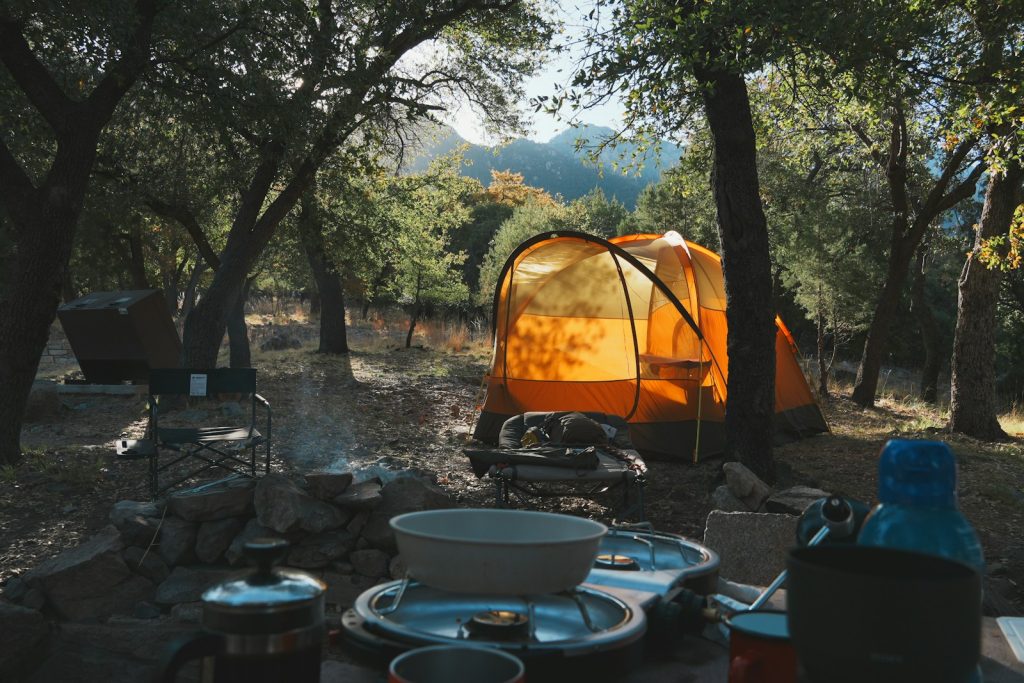
Cooking in the great outdoors is one of the joys of camping, but without a plan, it can quickly turn into a messy, unhygienic disaster. Between keeping critters away from your food and dealing with grease-covered pans, a well-organized camp kitchen is the secret to a stress-free trip.
In this guide, we’ll show you how to set up an efficient outdoor kitchen, store your groceries safely, and master the art of the “three-sink method” for washing dishes.
1. The Heart of the Kitchen: Storage & Prep
The key to a tidy campsite is a dedicated surface for cooking and storage. Instead of using your car trunk or the ground, invest in a portable station.
-
Portable Kitchen Station: These units provide a flat surface for your stove and shelves for your dry goods.
-
Our Pick: GCI Outdoor Master Cook Station – Features a sink, a stove stand, and plenty of space for utensils.
-
-
A Reliable Cooler: For perishables, insulation is everything.
-
Our Pick: Coleman 316 Series Insulated Cooler – Keeps ice for up to 5 days, even in summer heat.
-
2. Food Safety: Keep the Critters Out
Leaving food in the open is an invitation for raccoons, squirrels, or even bears. In the US, “Bear Safety” is a top priority for campers.
-
Hard-Sided Containers: Never leave food bags in your tent. Use airtight bins or keep them locked in your vehicle.
-
Dry Food Organization: Use clear nesting bins so you can see exactly where your coffee, spices, and snacks are.
-
Our Pick: Rubbermaid Brilliance Food Storage Containers – 100% leak-proof and crystal clear.
-
3. The Easy Way to Wash Dishes: The 3-Sink Method
You don’t have a dishwasher in the woods, but you still need sanitized plates. The “Three-Bucket System” is the gold standard for camping hygiene:
-
Sink 1 (Wash): Hot water with biodegradable soap.
-
Sink 2 (Rinse): Clean warm water to remove soap.
-
Sink 3 (Sanitize): Cold water with a drop of sanitizer (or very hot water) to kill bacteria.
-
The Gear: Collapsible sinks save a massive amount of space in your car.
-
Our Pick: Sammart Collapsible Dish Tub – Buy three of these for a perfect 3-sink setup.
-
-
The Soap: Always use “Leave No Trace” compliant soap.
-
Our Pick: Dr. Bronner’s Pure-Castile Liquid Soap – Concentrated, organic, and biodegradable.
-
Camp Kitchen Essential Checklist
| Item | Why You Need It | Recommended Model |
| Kitchen Station | Organization & Prep | GCI Outdoor Master |
| Cooler | Food Safety | Coleman 316 Series |
| Folding Sinks | Hygienic Cleanup | Sammart Dish Tub |
| Bio-Soap | Environmental Protection | Dr. Bronner’s Peppermint |
4. Pro Tips for a Cleaner Kitchen
-
Prep at Home: Chop vegetables, marinate meats, and crack eggs into a sealed bottle before you leave. This reduces trash and mess at the campsite.
-
The “Grey Water” Rule: Never dump your soapy dishwater directly into a lake or stream. Walk at least 200 feet away from water sources and scatter the water over the ground.
-
Dry it Right: Use a mesh hanging bag for air-drying dishes. It keeps them off the dirty picnic table and away from flies.
-
Recommended: Coghlan’s Picnic Table Mesh Bag.
-
FAQ: Outdoor Kitchen Basics
Q: How do I keep ants away from my kitchen station?
A: Keep all surfaces wiped down and ensure all food is in airtight containers. You can also place the legs of your table in small containers of water to create a “moat.”
Q: Can I use paper plates to avoid washing?
A: You can, but it creates a lot of trash that you have to pack out. Investing in a durable GSI Outdoors Enamel Tableware Set is more eco-friendly and stylish.
Final Thoughts
An organized camp kitchen makes cooking faster and cleanup easier, giving you more time to relax by the fire. With a solid cooler, collapsible sinks, and a bit of pre-trip prep, you’ll be the master chef of the woods!
Read too: How to Store Food to Avoid Animals: A Camper’s Guide to Safety
Disclaimer: As an Amazon Associate, I earn from qualifying purchases. Be bear smart, stay safe!